

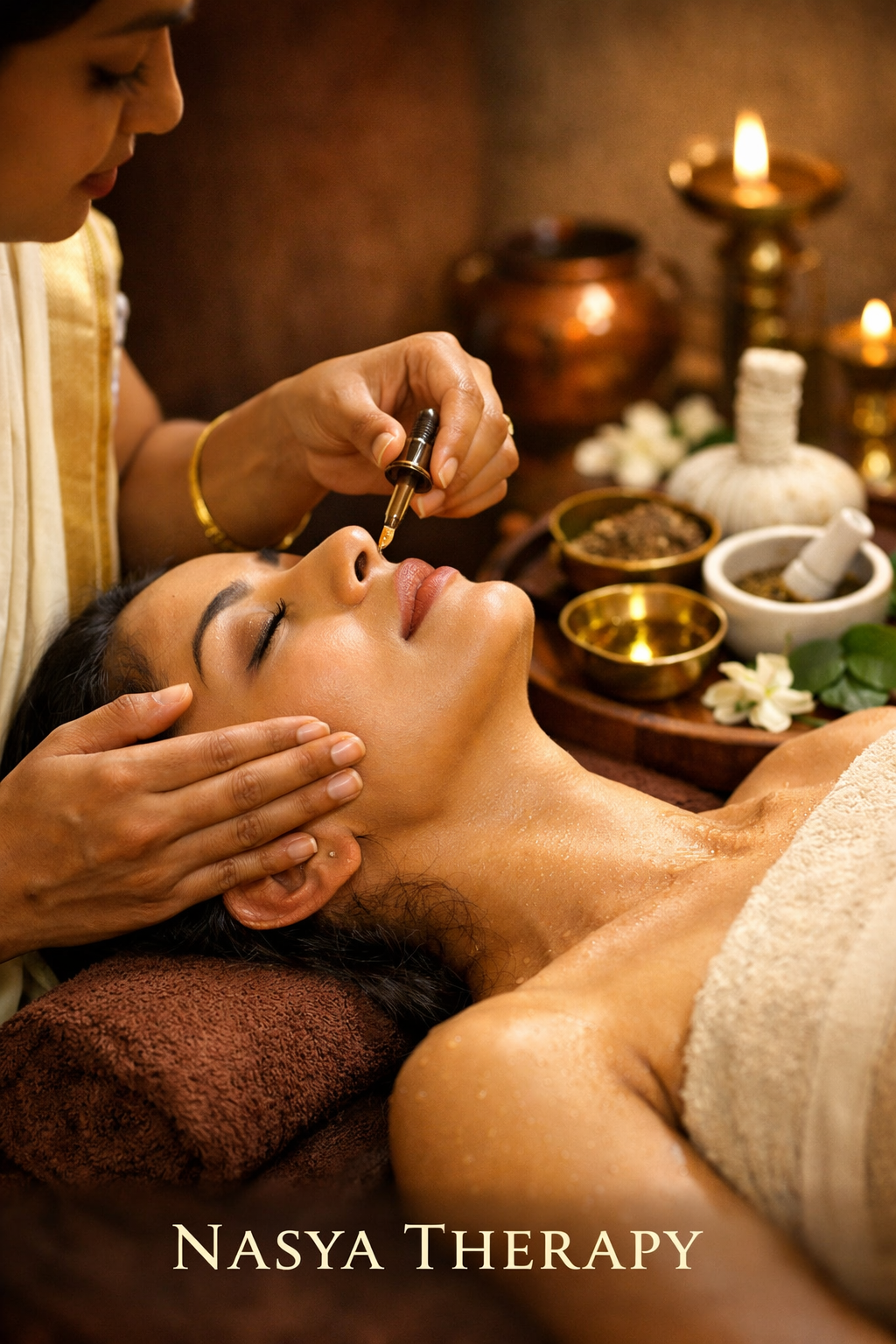
Benefits for Brain and Sinus Health: The Nasal Administration Therapy
Nasya therapy involves the administration of medicated substances through the nasal route. The nose is considered the gateway to the head (Shiras), and Nasya is the primary treatment for disorders affecting the upper parts of the body—the head, neck, and sense organs. This therapy systematically eliminates accumulated doshas from the cranial region, providing profound benefits for neurological, sensory, and respiratory health.
CLASSICAL SIGNIFICANCE
Nasya is extensively described in the Charaka Samhita (Siddhi Sthana) and Sushruta Samhita (Chikitsa Sthana). It is considered the treatment of choice for Urdhvajatrugata Vikara—disorders affecting the region above the clavicles. The therapy is traditionally emphasized during specific seasons and is often combined with other Panchakarma procedures for comprehensive detoxification.
Classical Quote:
“The nose is the gateway to the head. Just as a door opened in the right direction allows entry, Nasya administered properly reaches the cranial region and eliminates diseases.” – Sushruta
TYPES OF NASYA
CLASSIFICATION BY ACTION
| Type | Substances Used | Primary Action |
| Virechana Nasya | Pungent, cleansing herbs | Eliminates Kapha from head |
| Bruhmana Nasya | Nourishing oils, herbal milks | Nourishes nervous system |
| Shamana Nasya | Calming herbs | Pacifies doshas without elimination |
| Navana Nasya | Medicated oils | Therapeutic for specific conditions |
| Avapida Nasya | Fresh herb juices | Rapid action in acute conditions |
| Dhmapana Nasya | Herbal powders (snuff) | Deep cleansing of nasal passages |
CLASSIFICATION BY DOSE
| Type | Dose | Indication |
| Pradhamana Nasya | 4-8 drops | Strong detoxification |
| Avapida Nasya | 8-16 drops | Moderate action |
| Sneha Nasya | 16-32 drops | Nourishing, calming |
THERAPEUTIC PRINCIPLES
MECHANISM OF ACTION
| Route | Pathway | Therapeutic Effect |
| Nasal mucosa | Direct absorption | Local decongestion, healing |
| Olfactory nerve | Neural pathway to brain | Direct CNS effects |
| Blood vessels | Systemic absorption | General circulation |
| Lymphatics | Drainage pathways | Immune modulation |
PHYSIOLOGICAL EFFECTS
- Clears nasal and sinus passages
- Stimulates olfactory function
- Enhances cerebral circulation
- Nourishes nervous tissue
- Improves sensory organ function
- Balances Prana Vata (brain function)
INDICATIONS
PRIMARY INDICATIONS – HEAD AND NECK DISORDERS
| Category | Condition | Classical Name |
| Neurological | Headache | Shiroshoola |
| Migraine | Ardhavabhedaka | |
| Facial palsy | Ardita | |
| Trigeminal neuralgia | – | |
| Insomnia | Anidra | |
| Memory loss | Smritibhransha | |
| Sensory | Eye disorders | Netra Roga |
| Ear disorders | Karna Roga | |
| Nasal disorders | Pratishyaya | |
| Oral disorders | Mukha Roga | |
| Respiratory | Sinusitis | Dushta Pratishyaya |
| Allergic rhinitis | Vataja Pratishyaya | |
| Nasal polyps | Nasanaha | |
| Recurrent colds | Pratishyaya |
SECONDARY INDICATIONS
| Category | Condition | Rationale |
| Psychiatric | Anxiety, depression | Calms Prana Vata |
| Stress | Reduces mental tension | |
| Dermatological | Premature graying | Nourishes scalp |
| Hair fall | Improves hair health | |
| General | Convulsion | Balances cranial Vata |
CONTRAINDICATIONS
| Category | Specific Conditions |
| Acute conditions | Acute sinusitis with high fever, active nasal bleeding |
| Head injuries | Recent head trauma, skull fracture |
| Pregnancy | During pregnancy (except specific indications) |
| Menstruation | During active menstrual bleeding |
| After meals | Immediately after eating |
| After bathing | Immediately after bath |
| Intoxication | Alcohol or drug intoxication |
PROCEDURE DETAILS
POORVA KARMA (PREPARATORY PHASE)
| Step | Procedure | Purpose |
| Mukha Abhyanga | Facial massage | Loosen impurities, relax |
| Shiro Abhyanga | Scalp massage | Stimulate circulation |
| Karna Purana | Ear oil filling | Prepare cranial region |
| Swedana | Facial steam | Open channels |
| Gandusha | Oil pulling | Oral cleansing |
PRADHANA KARMA (MAIN PROCEDURE)
Patient Positioning:
- Supine position
- Head slightly lowered
- Neck extended
- Comfortable, relaxed posture
Administration:
| Step | Action | Duration |
| 1 | Warm medicine to body temperature | – |
| 2 | Instill drops in each nostril | 5-10 drops each |
| 3 | Gentle massage of nose and face | 2-3 minutes |
| 4 | Patient remains supine | 5-10 minutes |
| 5 | Patient sits up, expels discharge | As needed |
For Pradhamana Nasya (Powder):
- Fine powder administered through tube
- Patient inhales gently
- Followed by sneezing
- Cleansing of nasal passages
For Avapida Nasya (Juice):
- Fresh herb juice expressed
- Administered in appropriate dose
- Often followed by nasal discharge
PASCHAT KARMA (POST-PROCEDURE PHASE)
Immediate Post-Nasya:
| Action | Purpose |
| Rest for 30-60 minutes | Allow medicine to act |
| Avoid talking, reading | Conserve energy |
| Gentle gargling | Clear throat |
| Avoid cold exposure | Prevent Vata aggravation |
| Light meals | Support digestion |
Dhumapana (Medicated Smoking):
- Often recommended after Nasya
- Clears residual doshas
- Strengthens respiratory passages
Lifestyle Recommendations:
- Avoid sleeping during day
- Avoid suppression of natural urges
- Avoid loud talking, singing
- Avoid cold wind, dust, smoke
EXPECTED OUTCOMES
IMMEDIATE EFFECTS (24-48 HOURS)
- Clear nasal passages
- Improved breathing
- Mental clarity and alertness
- Relief from headache
- Better sensory perception
SHORT-TERM BENEFITS (1-4 WEEKS)
- Reduced frequency of sinus infections
- Improved allergy symptoms
- Better sleep quality
- Enhanced memory and concentration
- Healthier hair and scalp
LONG-TERM BENEFITS (3-6 MONTHS)
- Sustained relief from chronic sinusitis
- Improved neurological function
- Enhanced sensory organ health
- Better stress resilience
- Prevention of recurrent head and neck disorders
COMPLICATIONS AND MANAGEMENT
| Complication | Cause | Management |
| Excessive discharge | Over-administration | Rest, warm fluids |
| Headache | Improper position | Rest, gentle massage |
| Nosebleed | Excessive force, irritation | Cold compress, stop procedure |
| Eye irritation | Medicine entering eyes | Eye wash with rose water |
| Throat irritation | Medicine draining to throat | Warm salt water gargle |
QUALITY STANDARDS
FACILITY REQUIREMENTS
- Clean, quiet treatment room
- Comfortable treatment table
- Warm environment
- Proper storage for medicines
- Emergency equipment accessible
PRACTITIONER REQUIREMENTS
- Qualified Ayurvedic physician
- Training in Nasya administration
- Knowledge of nasal anatomy
- Ability to recognize complications
CONTEMPORARY RESEARCH
| Study Focus | Findings | Reference |
| Allergic rhinitis | Significant symptom reduction, improved quality of life | AYU, 2019 |
| Sinusitis | Reduced inflammation, improved drainage | IJAM, 2020 |
| Migraine | Reduced frequency and intensity of attacks | JAHM, 2021 |
| Insomnia | Improved sleep quality, reduced sleep latency | AYUSHDHARA, 2022 |
CLINICAL SUMMARY
| Parameter | Details |
| Primary Indications | Head, neck, and sensory disorders |
| Types | Virechana, Bruhmana, Shamana, etc. |
| Ideal Season | Spring and early morning |
| Preparation Duration | 30-60 minutes |
| Procedure Duration | 15-30 minutes |
| Course Duration | 7-14 days typically |
| Key Contraindications | Pregnancy, acute sinusitis, recent head injury |
| Expected Outcome | Cranial detoxification, sensory improvement |
CONCLUSION
Nasya therapy exemplifies Ayurveda’s sophisticated approach to treating disorders of the head and neck. By utilizing the nasal route—the direct gateway to the brain and sensory organs—this therapy achieves results that oral medications often cannot. From chronic sinusitis to migraine, from memory loss to facial paralysis, Nasya offers a unique and effective therapeutic approach.
As neurological and respiratory disorders continue to rise globally, Nasya therapy’s relevance extends far beyond its traditional applications. For the Ayurvedic practitioner, it remains an essential tool. For patients suffering from chronic head and neck disorders, it offers a pathway to lasting relief.
