

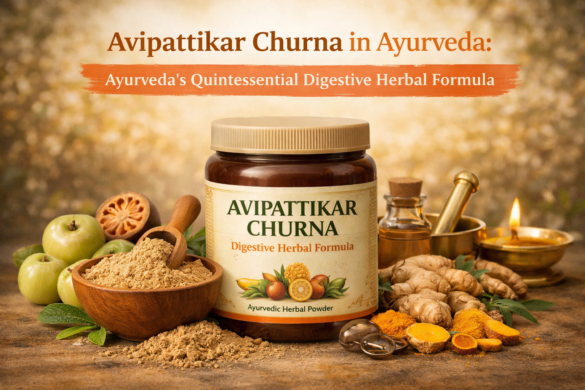
Avipattikar Churna is a classical Ayurvedic formulation renowned for its effectiveness in managing hyperacidity, indigestion, and other Pitta-related digestive disorders. Classified as a “Deepana-Pachana” and “Anulomana” formulation, it has been used for centuries to balance aggravated Pitta dosha while gently cleansing the bowels. The name “Avipattikar” literally means “that which prevents adverse effects” or “that which reverses the downward movement of toxins,” referring to its ability to correct the flow of Apana Vata and eliminate toxins.
Rooted in classical texts like the Bhaisajya Ratnavali and Sharngadhara Samhita, Avipattikar Churna is considered the formulation of choice for conditions like Amlapitta (hyperacidity), acid reflux, and constipation. Its gentle laxative action without causing dependency makes it unique among digestive formulations. Today, Avipattikar Churna remains a cornerstone of Ayurvedic gastroenterology, with growing recognition in integrative digestive health.
Composition and Ingredients
Avipattikar Churna is a moderately complex formulation consisting of multiple herbs working synergistically:
| Ingredient | Sanskrit Name | Botanical Name | Primary Function |
| Amalaki | Indian Gooseberry | Emblica officinalis | Pitta pacifier, antioxidant |
| Haritaki | Chebulic Myrobalan | Terminalia chebula | Mild laxative, Vata pacifier |
| Bibhitaki | Belliric Myrobalan | Terminalia bellirica | Kapha pacifier, detoxifier |
| Shunthi | Ginger | Zingiber officinale | Digestive stimulant |
| Pippali | Long Pepper | Piper longum | Bioavailability enhancer |
| Maricha | Black Pepper | Piper nigrum | Digestive stimulant |
| Vidanga | Embelia | Embelia ribes | Anti-microbial, detoxifier |
| Musta | Nutgrass | Cyperus rotundus | Digestive, anti-inflammatory |
| Nagara | Dry Ginger | Zingiber officinale | Digestive |
| Lavanga | Clove | Syzygium aromaticum | Aromatic, digestive |
| Trivrit | Operculina turpethum | Turpeth | Mild purgative |
| Patra | Cinnamon Leaf | Cinnamomum tamala | Aromatic, digestive |
| Ela | Cardamom | Elettaria cardamomum | Aromatic, carminative |
| Sharkara | Sugar | – | Sweetener, Pitta pacifier |
Note: The exact composition may vary slightly based on textual references, with some including additional herbs like Devadaru or Chitraka.
The preparation involves finely powdering all ingredients and mixing them with sugar (Sharkara), which constitutes a significant portion of the formulation and provides its characteristic sweet taste while balancing Pitta.
Ayurvedic Properties
Avipattikar Churna is primarily Pitta-Kapha pacifying with a balancing effect on Vata due to its mild laxative action.
| Property | Description |
| Rasa (Taste) | Madhura (Sweet), Tikta (Bitter), Kashaya (Astringent), Katu (Pungent), Amla (Sour) |
| Guna (Qualities) | Laghu (Light), Ruksha (Dry) |
| Virya (Potency) | Shita (Cooling) |
| Vipaka (Post-digestive effect) | Madhura (Sweet) |
| Dosha Effect | Pitta-Kapha Shamaka (Pacifies Pitta and Kapha) |
It acts as a Amlapitta hara (hyperacidity relieving), Anulomana (mild laxative), Deepana (digestive stimulant), and Pachana (digestive). It supports digestive health by correcting the flow of Apana Vata, reducing excessive gastric secretions, and promoting gentle elimination.
Health Benefits
1. Hyperacidity Management (Amlapitta)
Avipattikar Churna is the formulation of choice for all types of hyperacidity:
- Acid reflux and GERD
- Heartburn and sour belching
- Burning sensation in chest and throat
- Gastritis and gastric ulcers
2. Constipation Relief
Unlike harsh laxatives, Avipattikar provides:
- Gentle, non-habit-forming laxative action
- Regular bowel movements without cramping
- Softening of hard stools
- Correction of chronic constipation tendencies
3. Indigestion and Dyspepsia
It effectively addresses:
- Feeling of fullness after meals
- Slow digestion (Mandagni)
- Bloating and flatulence
- Loss of appetite
4. Liver Health
Avipattikar Churna supports liver function by:
- Promoting bile secretion
- Protecting against hepatotoxicity
- Supporting detoxification processes
5. Nausea and Vomiting
The cooling and digestive properties help:
- Reduce nausea, especially morning sickness
- Control vomiting tendencies
- Settle the stomach after episodes
6. Headache Relief
In Pitta-type headaches (associated with burning sensation, acidity), Avipattikar provides relief by addressing the root digestive cause.
7. Skin Health
By reducing Pitta and eliminating toxins, it helps manage:
- Acne and pimples (especially when linked to digestion)
- Urticaria and hives
- Heat rashes
8. Hemorrhoid Management
In bleeding piles (associated with Pitta), Avipattikar helps by:
- Regulating bowel movements
- Reducing inflammation
- Cooling the affected area
9. Oral Health
Reduces burning sensation in mouth, tongue ulcers, and excessive thirst associated with Pitta imbalance.
10. Urinary Disorders
Helps manage burning urination (Mutradaha) and other Pitta-related urinary issues.
Usage and Dosage
Standard Dosage
- Adults: 1/2 to 1 teaspoon (3–5 grams) once or twice daily
- For Acute Conditions: Up to 3 times daily for short periods
- For Chronic Management: Once daily at bedtime
Best Time for Consumption
- At Bedtime: Classic administration for morning bowel clearance
- After Meals: For immediate digestive support
- Empty Stomach: For detoxification purposes
Anupama (Adjuvants)
- Warm Water: For constipation and general digestive support
- Cold Water: For acute hyperacidity and burning sensation
- Milk: For Pitta pacification and nourishment
- Honey: For enhanced absorption (in smaller doses)
- Ghee: For chronic digestive issues (small quantity)
Duration of Use
Can be used for extended periods under professional supervision. For self-management, cycles of use with breaks are recommended.
Market and Industry Importance
Avipattikar Churna occupies a significant position in the Ayurvedic digestive health market. With the rising prevalence of acid reflux and digestive disorders, its demand continues to grow.
Market Drivers
- Lifestyle Diseases: Increasing cases of hyperacidity due to stress, irregular eating, and processed foods
- Proton Pump Inhibitor Concerns: Growing awareness of long-term side effects of conventional acid-blockers has boosted demand for natural alternatives
- Self-Care Trend: Consumers seeking OTC solutions for common digestive issues
- Urban Population: Higher incidence of digestive disorders in urban areas drives demand
- Preventive Health: Growing interest in maintaining digestive health proactively
Commercial Variants
- Avipattikar Churna (Classic): Traditional powder form
- Avipattikar Tablets: Convenient for dosing and travel
- Sugar-Free Avipattikar: For diabetic patients
- Avipattikar with Cooling Herbs: Enhanced with herbs like Guduchi or Yashtimadhu
- Avipattikar Syrup: Liquid formulation for easier consumption
Market Segmentation
- Household Segment: Staple for managing everyday acidity
- Clinical Segment: Prescribed by Ayurvedic practitioners for chronic cases
- Geriatric Segment: For age-related digestive issues
- Export Market: Growing demand in Middle East, USA, and Europe
Competitive Landscape
Multiple major players dominate the market, with competition based on:
- Authenticity of ingredients
- Manufacturing quality
- Brand trust and heritage
- Pricing strategy
Precautions and Contraindications
Contraindications
- Pregnancy: Should be avoided, especially in first trimester
- Lactation: Consult physician before use
- Debilitated Conditions: In weak or emaciated individuals
- Severe Diarrhea: Not recommended during acute diarrheal episodes
- Children: Use only under professional supervision
Possible Side Effects
- Overuse: May lead to loose motions or dehydration
- Initial Reactions: Mild detox symptoms possible
Drug Interactions
May interact with:
- Antacids and acid-blockers
- Laxatives
- Diuretics
Quality Considerations
- Ensure authentic sourcing of all ingredients
- Look for GMP-certified manufacturing
- Check for proper sugar proportion (affects taste and efficacy)
- Verify absence of adulteration
Storage
Keep in airtight container, away from moisture and direct sunlight.
Conclusion
Avipattikar Churna represents Ayurveda’s sophisticated approach to digestive health—addressing root causes rather than merely suppressing symptoms. By balancing Pitta, promoting gentle elimination, and supporting overall digestive function, it offers a comprehensive solution for the millions suffering from hyperacidity and related disorders.
In an era of rising digestive complaints, Avipattikar Churna’s relevance continues to grow. For the Ayurvedic industry, it represents a steady revenue generator with loyal repeat customers. For consumers, it offers a natural, effective alternative to conventional acid-blockers. As integrative medicine gains ground, Avipattikar Churna is poised to become an even more significant player in the global digestive health market.
