
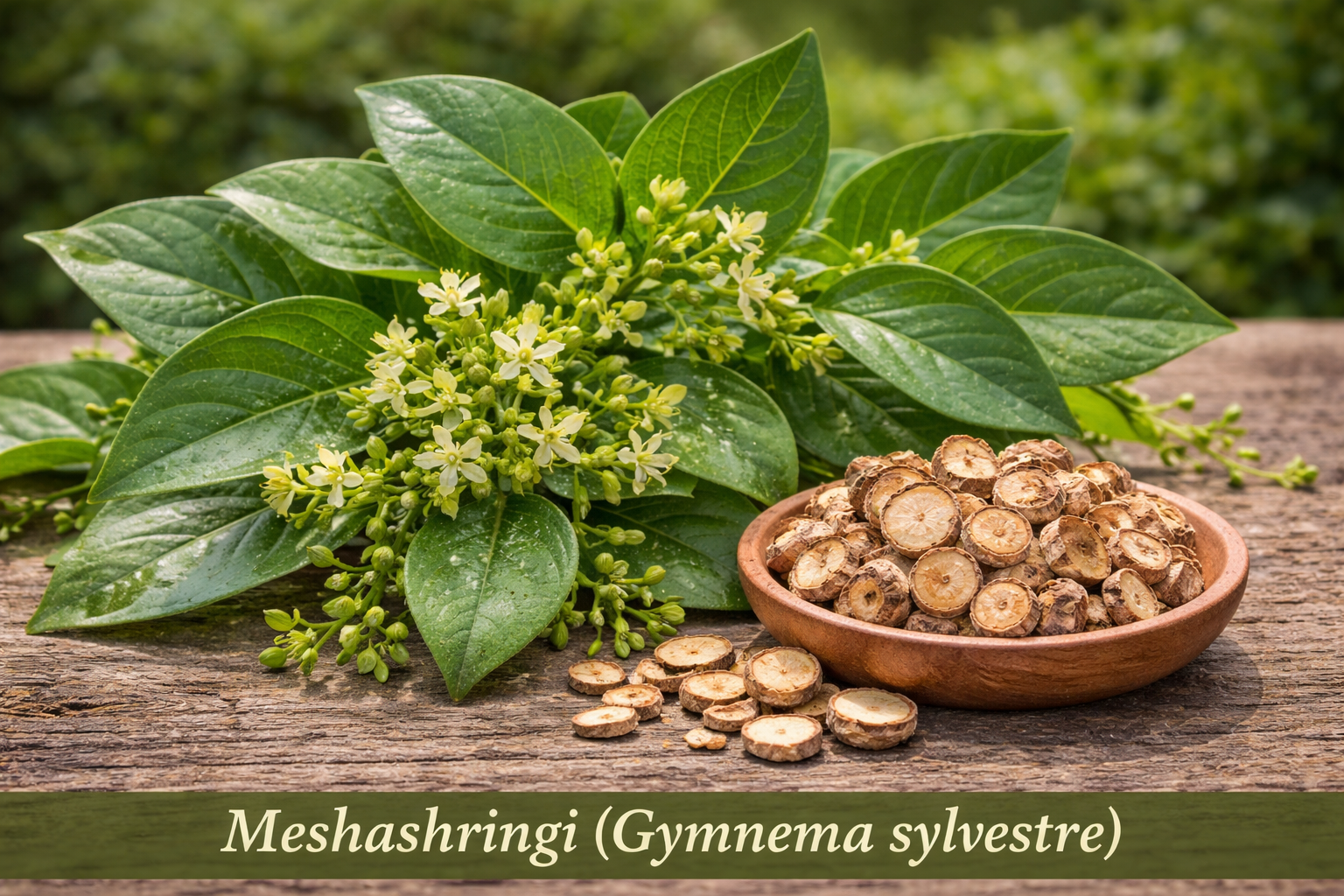
Meshashringi is a herb name that presents one of the most persistent and significant identity challenges in the Ayurvedic raw material trade. The name, which translates to “ram’s horn,” is often applied to more than one botanical species across different regions of India. This botanical ambiguity creates considerable confusion for manufacturers, traders, and quality control professionals. In many parts of the country, Meshashringi is considered synonymous with Gudmar (Gymnema sylvestre), the well-known anti-diabetic herb. However, in other regions and textual traditions, the name refers to a completely different plant, Aegle marmelos, the Bael tree, specifically its leaf. A third school of thought identifies it with Crateva nurvala, known as Varuna. For the industry professional, understanding this complexity is essential to ensure the correct herb is procured and utilized in formulations.
The name Meshashringi is descriptive of the fruit of Aegle marmelos, which has a distinctive shape reminiscent of a ram’s horn. This connection is strong in certain Ayurvedic traditions, particularly in the context of formulations for diabetes where Bael is also valued. However, Gymnema sylvestre, with its unparalleled “sugar-destroying” properties, has become so strongly associated with blood sugar management that it has, in modern trade and practice, largely claimed the name Meshashringi for itself. This has led to a situation where the same formulation name, such as Meshashringi or Meshashringyadi combinations, may be prepared with different botanical ingredients in different parts of the country, or even by different manufacturers in the same region. This lack of standardization poses a serious challenge to the reproducibility and predictability of therapeutic outcomes.
Gymnema sylvestre, as described in detail in the previous article, belongs to the family Apocynaceae. It is a large, woody, perennial climber native to central and southern India. Its leaves are simple, opposite, and covered with fine hairs. Its claim to the name Meshashringi is supported by its well-documented and scientifically validated role in diabetes management, which aligns perfectly with the traditional indications of Meshashringi as a pramehahara (anti-diabetic) herb. The powerful gymnemic acids it contains provide a clear and measurable mechanism of action. In the modern commercial context, particularly in the nutraceutical and phytopharmaceutical industries, Gymnema sylvestre is almost universally accepted and traded as Meshashringi, especially when the intended use is blood sugar control.
Aegle marmelos, the Bael tree, belongs to the family Rutaceae. It is a medium-sized deciduous tree sacred to Hindus and found throughout India. Its fruit is used extensively in treating diarrhea and dysentery, but the leaves are also considered medicinal and are sometimes referred to as Meshashringi due to the shape of the trifoliate leaf, which can be interpreted as resembling a horn. Bael leaf is known for its anti-diabetic, anti-inflammatory, and antioxidant properties. It contains compounds like skimmianine and aegeline. In some classical texts, references to Meshashringi are clearly describing the Bael tree, and traditional formulations from certain regions continue to use Bael leaf under this name.
Crateva nurvala, known commonly as Varuna, is a third species occasionally linked to the name Meshashringi. Varuna is primarily known for its action on the urinary system, particularly in treating kidney stones and urinary tract disorders. Its connection to Meshashringi is less direct and less common than the other two candidates, but it persists in some local traditions. This further complicates the picture, as a manufacturer seeking Meshashringi for a urinary disorder formulation might inadvertently procure a herb intended for diabetes management, or vice versa.
The therapeutic indications for the true Meshashringi, whichever botanical source is accepted, are centered on prameha (diabetes and metabolic disorders). It is also used in kasa (cough), shwasa (asthma), and as a general rasayana (rejuvenative). If the herb in use is Gymnema sylvestre, the primary action will be on blood sugar regulation and insulin modulation. If it is Aegle marmelos leaf, the action will be broader, encompassing digestive health and anti-inflammatory effects alongside hypoglycemic activity. This divergence in pharmacological profile has direct implications for the efficacy and safety of the final formulation. A product intended for diabetes that inadvertently contains Bael leaf instead of Gymnema may be less effective, while a product intended for diarrhea that contains Gymnema may not provide the expected relief.
From a commercial and procurement perspective, the Meshashringi identity issue demands a proactive and rigorous approach. The first and most critical step is to establish, without ambiguity, which botanical species is intended for the specific formulation being manufactured. This requires consulting authoritative references, including the Ayurvedic Formulary of India and the specific textual sources upon which the formulation is based. If the source text is clear, that should guide the choice. If the formulation is proprietary, the manufacturer must decide which species aligns with their intended therapeutic claim and product positioning.
Once the botanical identity is fixed, procurement specifications must be drafted with absolute clarity. The purchase order should not simply say “Meshashringi.” It should specify Gymnema sylvestre leaf, or Aegle marmelos leaf, complete with the correct botanical name, family, and part used. The supplier must be educated about the distinction and required to confirm that they are supplying the specified species. Upon receipt, the quality control department must have the capability to verify the identity through macroscopic and microscopic examination, and if necessary, through chemical fingerprinting using HPTLC. A reference standard of the intended species must be available for comparison.
The price of the raw material will vary depending on which species is being sourced. Gymnema sylvestre, with its high demand in the nutraceutical market, typically commands a higher price than Aegle marmelos leaf, which is often more abundant and less intensively collected. A supplier offering Meshashringi at a significantly lower price than the market rate for Gymnema is highly likely to be supplying Bael leaf or an even cheaper substitute. Price can therefore serve as an initial screening tool, but it cannot replace definitive botanical identification.
For the manufacturer, the Meshashringi confusion is not merely an academic botanical puzzle. It is a practical quality assurance challenge with direct implications for product safety, efficacy, and regulatory compliance. A formulation that relies on the specific properties of Gymnema sylvestre will not deliver the expected results if it is made with Aegle marmelos. A manufacturer who cannot demonstrate which species they are using and why may face questions from regulators. The only solution is a commitment to clarity at every stage of the supply chain, from the initial sourcing decision through to the final quality control sign-off. This diligence protects the integrity of the product and the trust of the consumer.
