

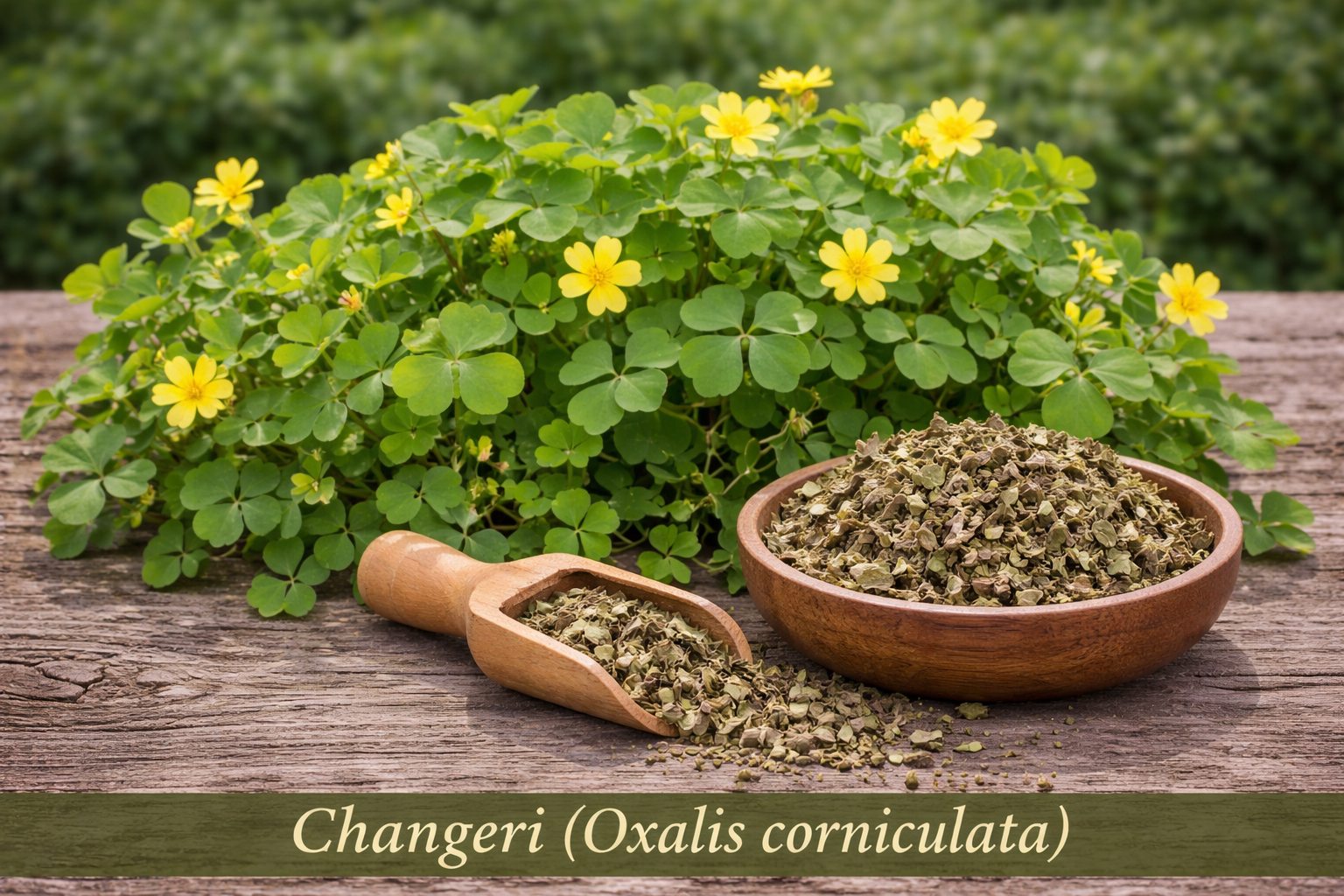
Changeri, known botanically as Oxalis corniculata and commonly referred to as Indian Sorrel or Creeping Wood Sorrel, is a humble yet widely distributed herb that grows abundantly across India. Often seen as a common weed in gardens, agricultural fields, and along roadsides, this small creeping plant holds a respectable place in the Ayurvedic materia medica for its diverse therapeutic applications, particularly in digestive and liver disorders. Its accessibility and efficacy make it a valuable component in both household remedies and classical formulations.
The plant belongs to the family Oxalidaceae. It is a small, annual or perennial herb with a creeping stem that roots at the nodes, allowing it to spread rapidly. The leaves are trifoliate, resembling clover, and are light green to purplish-green in color. The leaflets are heart-shaped and fold down at night. The flowers are small and yellow, and the fruit is a narrow, cylindrical capsule that bursts open when ripe, dispersing the seeds. The entire plant has a characteristic sour taste due to the presence of oxalic acid.
In Ayurveda, Changeri is classified as a Shad-rasa herb, meaning it possesses multiple tastes, with amla (sour) being predominant. It is known for its light (laghu) and sharp (tikshna) properties. It is traditionally used to balance Kapha and Vata doshas while Pitta should be used with caution due to its sour nature. The whole plant is utilized for medicinal purposes, typically collected when fresh, as its potency is considered highest in the fresh state.
The therapeutic applications of Changeri are numerous and well-documented in classical texts. It is considered a deepana (appetizer) and pachana (digestive), making it highly effective in conditions of low digestive fire. It is commonly used in diarrhea, dysentery, and hemorrhoids. Its property of grahi (absorbent) helps in binding loose stools. Changeri is also known for its liver-protective effects and is used in mild liver disorders and in treating anemia. Externally, the fresh juice is applied to skin eruptions, insect bites, and to reduce inflammation. It is also used in the management of tridosha jwara (fevers of all three dosha origins).
From a commercial perspective, Changeri presents an interesting opportunity. Unlike many Himalayan herbs that are rare and endangered, Changeri is abundant and easy to cultivate. It grows readily in most parts of India throughout the year, with peak growth during the monsoon and winter seasons. This wide availability makes it an affordable raw material. However, its perishable nature means that fresh herb is often preferred, creating a market for value-added products like fresh juice, dried powder, and standardized extracts. The demand for Changeri is driven primarily by its use in liver care formulations, digestive tonics, and in proprietary medicines for diarrhea and dysentery. The growing consumer interest in natural and readily available herbal remedies also supports its market.
The procurement of Changeri is relatively straightforward. The major sourcing hubs are not concentrated in a single mandi but are spread across local collection networks. It is often collected by local villagers and sold to smaller regional traders who aggregate and supply to larger manufacturers. The price is generally low due to its abundance. However, the challenge lies in ensuring the material is clean, free from adulteration with other similar-looking sorrel species, and properly dried to preserve its green color and active principles. Quality control parameters focus on macroscopic and microscopic identity, absence of foreign matter, and low microbial load, especially for fresh juice products.
Changeri is a classic example of a common weed with uncommon therapeutic value. Its accessibility and efficacy make it a practical choice for formulators looking to create affordable, effective remedies for common digestive ailments. For the Ayurvedic industry, it represents a sustainable and easily replenishable resource that deserves wider recognition and utilization.
