

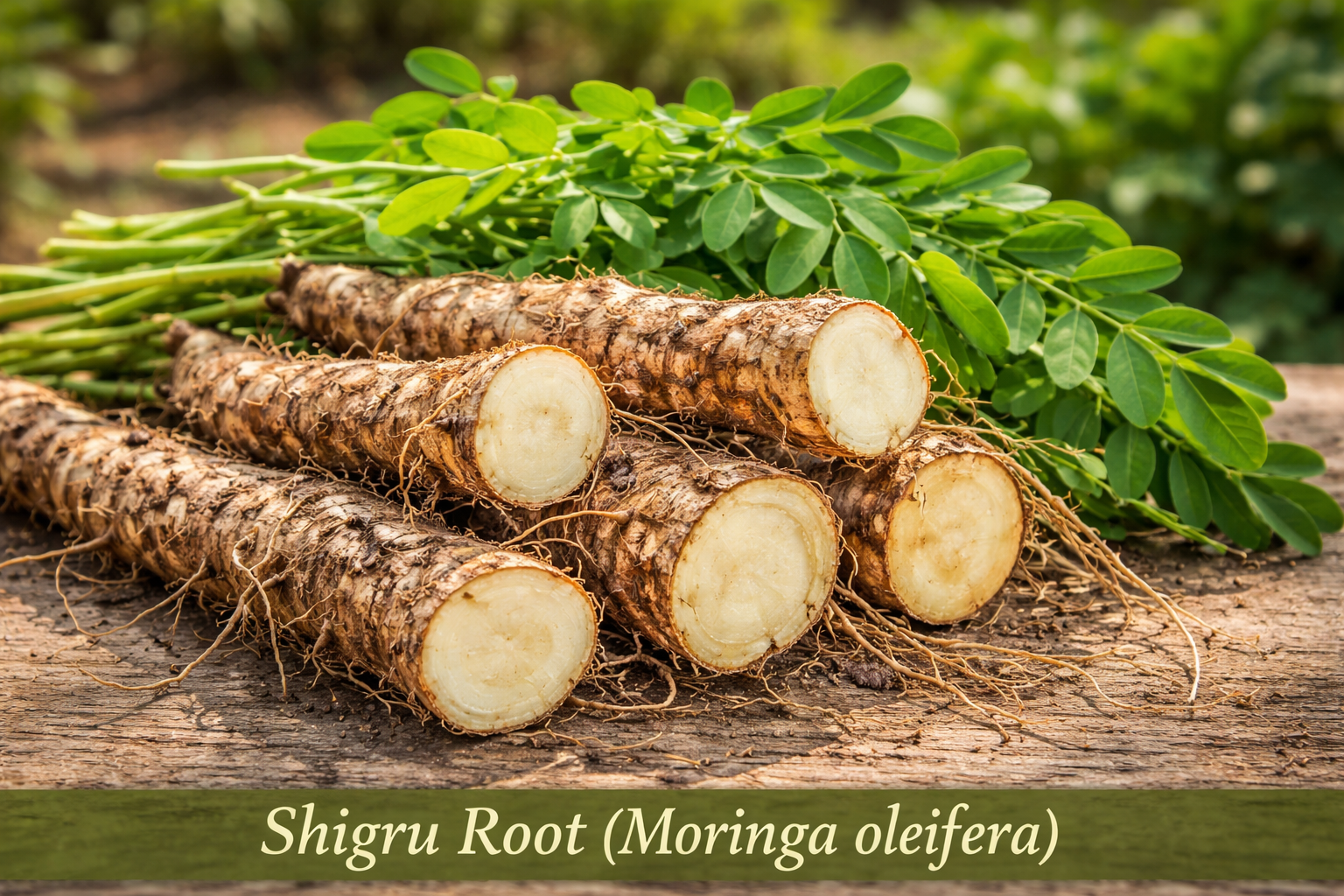
Shigru, known botanically as Moringa oleifera and commonly referred to as Drumstick Tree or Horseradish Tree, is one of the most widely recognized and celebrated plants in the Indian subcontinent. While the leaves and fruits (drumsticks) have gained global superfood status, the root of this remarkable tree holds a distinct and powerful place in classical Ayurveda. Often considered more potent than the aerial parts, Shigru root is a key ingredient in formulations targeting neurological disorders, inflammation, and obesity.
The plant belongs to the family Moringaceae. It is a fast-growing, deciduous tree native to the Himalayan foothills but now naturalized and cultivated throughout tropical and subtropical regions of India. The tree is medium-sized, with feathery compound leaves, fragrant white flowers, and long, pendulous fruits. The root is thick, tuberous, and has a distinct pungent taste reminiscent of horseradish, which gives the tree one of its common names. In Ayurvedic practice, the root bark is often preferred over the central woody portion and is considered more therapeutically active.
In Ayurveda, Shigru is classified as ushna virya (hot in potency) and tikshna (sharp). It is known to balance Kapha and Vata doshas while Pitta should be used with caution. The root possesses katu (pungent) and tikta (bitter) tastes. It is considered a deepana (appetizer), pachana (digestive), and shothahara (anti-inflammatory). Classical texts describe it as medohara (reducing obesity) and vatakaphapaha (alleviating Vata and Kapha). The root is also known for its rasayana (rejuvenative) properties.
The therapeutic applications of Shigru root are distinct from those of the leaves and fruits. It is primarily used in the management of vata roga (neurological disorders) such as paralysis, facial palsy, and sciatica. Its anti-inflammatory action makes it effective in treating arthritis and joint pain. It is a key ingredient in formulations for obesity and metabolic disorders due to its fat-scraping properties. Shigru root is also used in digestive disorders, particularly those involving sluggish digestion and intestinal parasites. Externally, it is used in pastes and oils for wound healing, reducing inflammation, and relieving pain. The root is also valued for its aphrodisiac properties and is included in certain vitality-promoting formulations.
From a commercial perspective, Shigru root occupies a different market segment than the leaves. While Moringa leaf powder has become a mass-market commodity, the root remains a specialized ingredient primarily used in classical Ayurvedic manufacturing. The root is more potent and requires careful processing. The demand for Shigru root is driven by Ayurvedic pharmaceutical companies producing classical formulations like Shigru Guggulu and Shigru Moola Churna, as well as proprietary medicines for arthritis, obesity, and neurological conditions. The growing market for natural anti-inflammatory and weight management products also supports demand.
The procurement of Shigru root requires attention to several factors. The root is typically harvested from trees that are 2-3 years old. Younger roots are considered more potent. Harvesting involves uprooting the tree or carefully extracting lateral roots, which means the plant is destroyed, making sustainable cultivation essential. The root is washed, cut into pieces, and dried. The outer bark is sometimes separated and sold as root bark, which commands a higher price. Major sourcing areas include Tamil Nadu, Andhra Pradesh, Karnataka, and Uttar Pradesh, where Moringa is widely cultivated. The price varies based on the part (whole root vs. root bark) and the quality of drying.
Quality control for Shigru root involves several parameters. Macroscopic identification focuses on the characteristic pungent odor and taste. The root pieces should be free from mold, insect infestation, and excessive foreign matter. Chemical analysis often targets the presence of alkaloids and glucosinolates, which are believed to contribute to its therapeutic action. HPTLC fingerprinting can be used to ensure batch-to-batch consistency. Microbial testing is essential, as roots harvested from soil can carry significant bioburden if not properly cleaned and dried.
The distinction between Shigru root and the more commercially popular leaves is important for manufacturers. While the leaves are excellent nutritional supplements, the root carries the deeper, more potent therapeutic actions described in classical texts. For companies looking to create authentic Ayurvedic formulations for Vata disorders, arthritis, and metabolic conditions, access to high-quality Shigru root is essential. The development of sustainable cultivation practices that allow for root harvesting without destroying the entire plant population is an area of growing interest and importance.
