

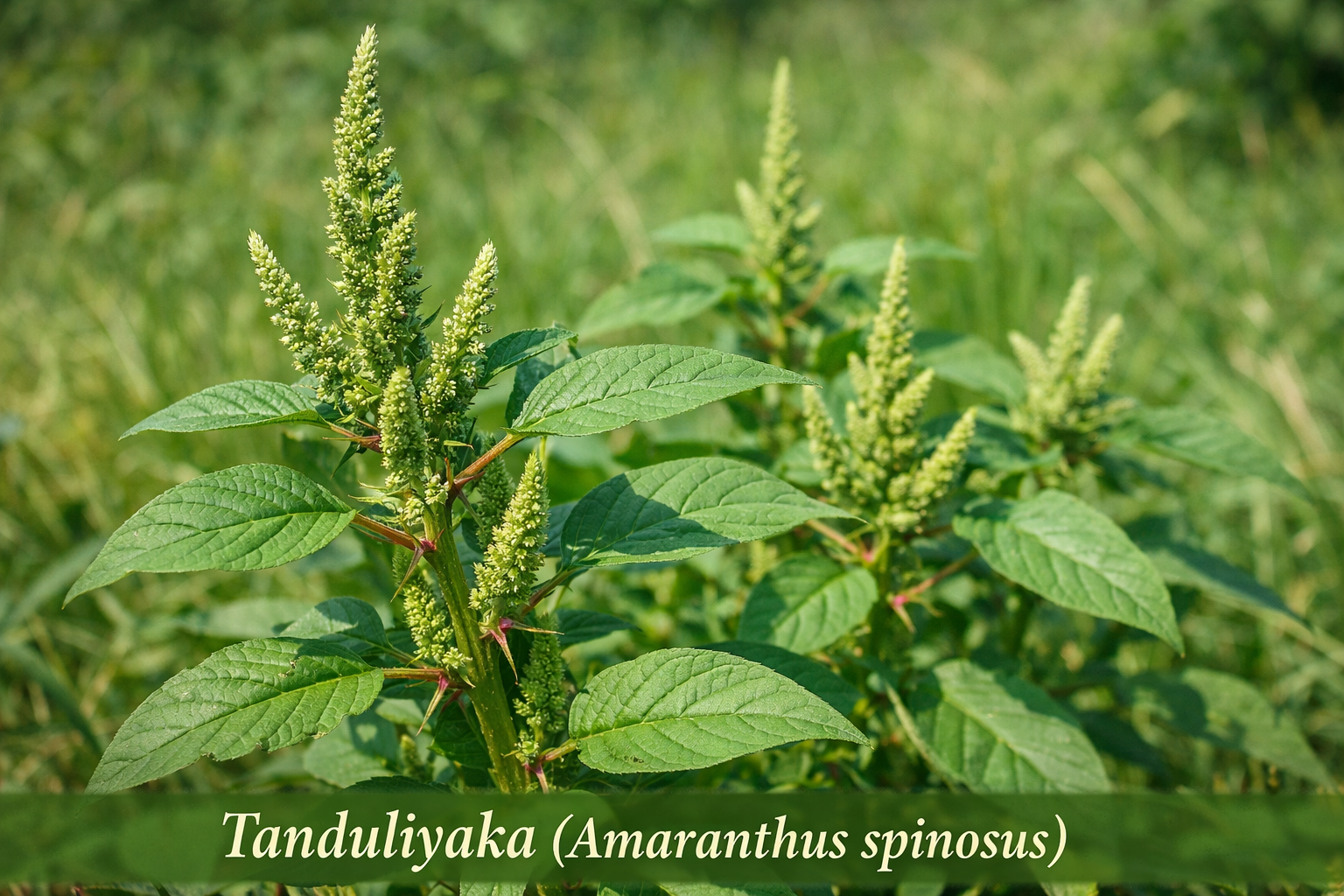
Tanduliyaka, known botanically as Amaranthus spinosus and commonly referred to as Spiny Amaranth or Kantili Chaulai, is a wild relative of the cultivated grain amaranth. It is a common sight across India, thriving in waste places, roadsides, and agricultural fields, often considered a troublesome weed due to its aggressive growth and sharp spines. Yet, within Ayurveda, this resilient plant is recognized as a valuable medicinal herb with a wide range of applications, particularly in gynecological disorders, bleeding conditions, and as a general health tonic.
The plant belongs to the family Amaranthaceae. It is an erect, annual herb that can grow up to one meter in height. Its most distinguishing feature is the presence of sharp, axillary spines at the nodes, which can grow up to two centimeters long. The leaves are simple, alternate, and ovate to lanceolate in shape. The flowers are small, greenish, and borne in dense spikes at the ends of branches. The seeds are small, shiny, and black. Despite its spiny defense, the tender leaves and stems are edible and are consumed as a leafy vegetable in many parts of India.
In Ayurveda, Tanduliyaka is known for its cooling (shita virya) and balancing properties. It is considered beneficial for all three doshas, particularly Pitta and Kapha. The whole plant is used medicinally, with the root, leaves, and seeds all possessing therapeutic value. It is classified as a grahi (absorbent) and raktaprasadaka (blood purifier). The plant is rich in iron, calcium, and other essential nutrients, which contributes to its use as a nutritional supplement.
The therapeutic applications of Tanduliyaka are extensive. It is considered one of the best herbs for managing menorrhagia (excessive menstrual bleeding) and other bleeding disorders such as hematuria (blood in urine) and bleeding piles. Its cooling and astringent properties help in checking hemorrhages. It is also used in diarrhea and dysentery, particularly when there is bleeding. The root is considered especially effective in these conditions. Tanduliyaka is also used as a rasayana (rejuvenative) to promote overall health and longevity. Its diuretic property makes it useful in urinary disorders. The leaves, applied externally, are used as a poultice to reduce inflammation, abscesses, and to soothe burns. The seeds are considered cooling and are used in treating excessive thirst and burning sensations.
From a commercial perspective, Tanduliyaka occupies a unique niche. Like Changeri, it is abundant and grows wild across the country. It is not typically cultivated on a large scale for medicinal purposes but is collected from the wild or from agricultural fields where it grows as a weed. This makes it a low-cost raw material. However, its status as a weed also means that collection can be inconsistent, and the supply chain is often informal. The primary demand drivers are manufacturers of proprietary medicines for menstrual disorders, gynecological health supplements, and digestive tonics. The growing awareness of women’s health issues and the preference for natural remedies in this space create a steady market for Tanduliyaka.
The sourcing of Tanduliyaka requires careful attention to the collection process. Since it grows in waste places and along roadsides, there is a risk of contamination with dust, pollutants, and other undesirable materials. Suppliers must ensure that the herb is collected from clean areas and thoroughly washed and dried. The presence of the sharp spines also requires careful handling during processing. The whole plant is typically dried and then chopped or powdered. Quality control involves verifying the identity through macroscopic and microscopic features, ensuring the absence of excessive foreign matter, and testing for microbial contamination. The root is often considered a premium part and may be sold separately.
Tanduliyaka is a testament to the Ayurvedic principle that even the most common and unassuming plants can hold profound medicinal value. Its specific action on the female reproductive system and its ability to address bleeding disorders make it an indispensable herb in the gynecological practice. For the Ayurvedic industry, it represents an affordable and effective ingredient that deserves greater attention and more structured supply chains to ensure consistent quality.
