

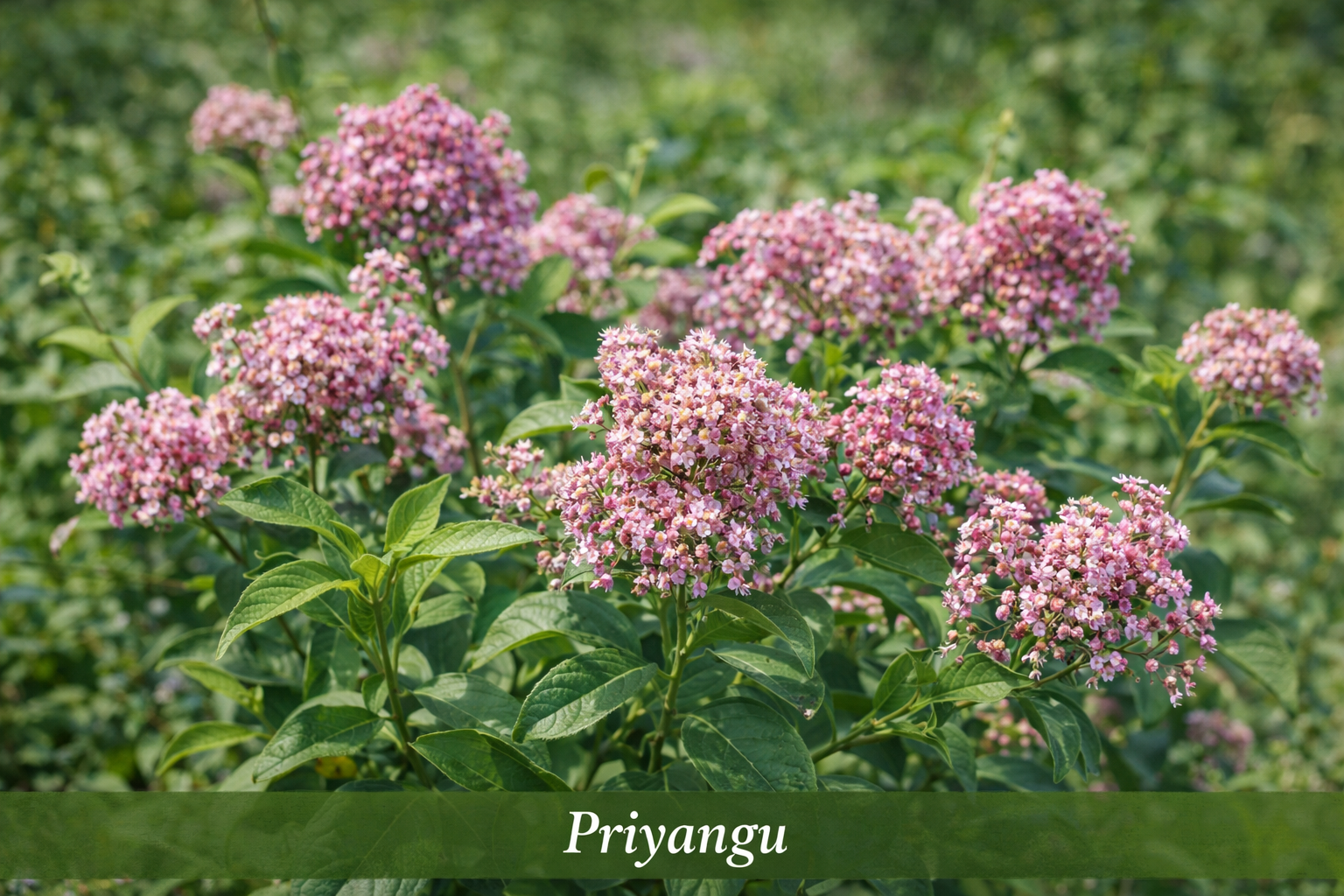
Priyangu (Callicarpa macrophylla Vahl.) is a flowering plant species belonging to the family Lamiaceae (formerly placed in Verbenaceae). Revered in traditional Indian medicine systems, particularly Ayurveda, it is known by several synonyms such as Priyangu, Gandhapriya, and Phalini, reflecting its fragrant and astringent properties. The name “Priyangu” is derived from Sanskrit, roughly translating to “dear friend” or “pleasing body,” alluding to its traditional use in cosmetics and as a gentle, effective remedy.
Botanical Description and Habitat
Callicarpa macrophylla is a large shrub or small tree, typically growing to a height of 1.5 to 4 meters. Its most distinctive feature is its large, ovate-lanceolate leaves, which are rough to the touch on the upper surface and covered with a dense, white or greyish tomentum (woolly hairs) on the underside. This gives the foliage a characteristic two-toned appearance. The plant produces small, tubular, pinkish or lavender flowers in dense, branched clusters (cymes) in the leaf axils. The fruits are small, succulent, globose drupes that ripen to a beautiful whitish-violet or lavender color, which is a key identifying feature. Native to the subtropical Himalayas, it is found from Nepal eastwards to Bhutan and into the hills of Northeast India, also extending to parts of China and Southeast Asia. It thrives in moist, shaded areas along forest edges and streams at altitudes up to 1,500 meters.
Traditional and Ayurvedic Significance
In Ayurveda, Priyangu is considered a potent herb with astringent (Kashaya), bitter (Tikta), and sweet (Madhura) tastes. Its primary karma (action) is Raktapitta shamaka (pacifying bleeding disorders) and Stambhana (absorbent or astringent). It is extensively documented in classical texts like the Charaka Samhita and Sushruta Samhita for its ability to manage conditions involving excess heat and bleeding.
The dried flower buds and fruits are the primary parts used medicinally. A key application is in the management of Pradara (abnormal uterine bleeding or menorrhagia) and other gynecological disorders. Its cooling and astringent qualities help tone the uterine tissues and reduce excessive discharge. It is also indicated in conditions like Raktapitta (bleeding diathesis, such as nosebleeds or bleeding gums) and is used topically to promote wound healing and treat skin conditions like acne, urticaria, and minor burns. Furthermore, its fragrant nature lends it to use in cosmetic preparations (lepas) for improving complexion and reducing excessive sweating.
Phytochemistry and Modern Research
The therapeutic properties of Priyangu are attributed to its rich phytochemical profile. The plant contains a variety of bioactive compounds including flavonoids (such as quercetin and kaempferol), terpenes, tannins, and essential oils. These constituents are responsible for its observed anti-inflammatory, antioxidant, antimicrobial, and analgesic activities.
Modern scientific studies have begun to validate its traditional uses. Research has demonstrated significant antimicrobial activity against various bacteria and fungi, supporting its use in wound healing and skin infections. The anti-inflammatory and analgesic effects have been confirmed in animal models, providing a rationale for its use in inflammatory conditions. Its antioxidant properties, largely due to the flavonoid content, help combat oxidative stress, which is implicated in many chronic diseases. Studies are also emerging on its potential hepatoprotective (liver-protecting) and anti-ulcer activities, though more research is needed.
Conclusion
Priyangu (Callicarpa macrophylla) stands as a classic example of a gentle yet effective herb in traditional medicine. Its primary role as a uterine tonic and hemostatic agent remains central to its use, supported by its cooling, astringent, and anti-inflammatory properties. While modern research is progressively validating its traditional claims, its significance in Ayurveda as a “dear friend” to women’s health and skin wellness remains paramount. Further scientific exploration could unlock even greater therapeutic potential for this versatile plant.
