
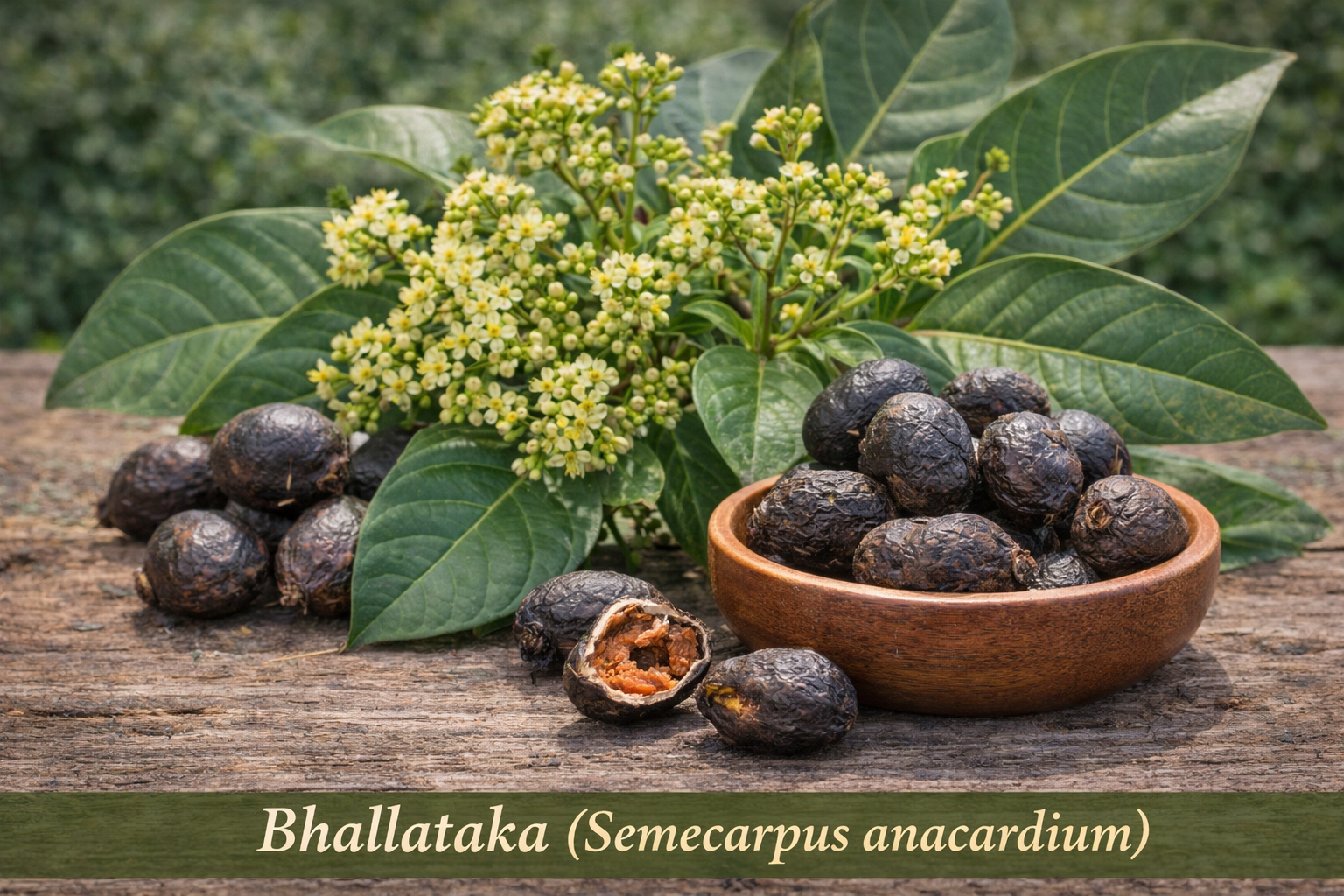
Bhallataka, known botanically as Semecarpus anacardium and commonly referred to as Marking Nut, is one of the most paradoxical and potent herbs in the Ayurvedic materia medica. It is classified as a upavisha (semi-poisonous) drug, requiring meticulous processing before it can be used therapeutically. Yet, when handled correctly, it transforms into a powerful rejuvenative and therapeutic agent, highly valued for its actions in deep-seated metabolic disorders, neurological conditions, and as a rasayana (rejuvenative).
For the B2B reader, Bhallataka presents a unique set of challenges and opportunities. It is not a herb for the casual or inexperienced manufacturer. The gap between its toxic raw form and its therapeutic processed form is bridged by specialized knowledge and precise shodhana (purification) techniques. This creates a high barrier to entry but also a significant market opportunity for companies that master its processing. The demand for properly processed Bhallataka formulations, particularly in the management of arthritis, tumors, and as an immunomodulator, remains steady among knowledgeable practitioners and patients.
This guide provides a comprehensive overview of Bhallataka from an industry perspective. It covers its botanical identity, the toxic principles that necessitate careful handling, the classical purification methods that are mandatory for safe use, its key therapeutic applications driving demand, current market intelligence, and critical quality control parameters for procurement and manufacturing.
Botanical Identity and Physical Description
Semecarpus anacardium belongs to the family Anacardiaceae, the same family as cashew and mango. It is a moderate-sized deciduous tree native to India, found abundantly in the sub-Himalayan tracts, as well as in hotter parts of India such as Bihar, Bengal, Madhya Pradesh, and the Western Ghats. The tree can grow up to 15-25 meters in height.
The commercially utilized part is the fruit, specifically the black, resinous nut that sits on top of a fleshy, orange-red receptacle (often called the “apple”). In Ayurvedic trade, the term “Bhallataka” refers to the nut, which is the dried fruit without the receptacle. The nut is approximately 2-3 cm long, smooth and shiny when mature, and contains a highly caustic, oily resin within its pericarp. This resin is the source of both its toxicity and its therapeutic power.
The Bhallataka Paradox: Toxicity and Therapeutics
The raw, unprocessed Bhallataka fruit is intensely irritant and vesicant (blister-forming). Contact with the skin can cause severe dermatitis, and ingestion can lead to inflammation of the gastrointestinal tract and other toxic effects. The primary toxic principles are a group of phenolic compounds, structurally similar to urushiol, the irritant found in poison ivy. These compounds include bhllawanol, semicarpol, and other catechols.
However, the same compounds that cause toxicity, when properly processed and administered in controlled doses, exhibit profound therapeutic actions. They are known to have:
- Anti-inflammatory and analgesic properties: Making Bhallataka valuable in treating arthritis and joint disorders.
- Anti-tumor and anti-cancer potential: Classical texts mention its use in treating tumors (gulma and arbuda), and modern research is exploring these properties.
- Immunomodulatory effects: It acts as a rasayana, enhancing immunity and promoting longevity.
- Nervine stimulant properties: Used in certain neurological conditions.
The transformation from poison to medicine is entirely dependent on the shodhana process. This is not merely a traditional ritual; it is a critical pharmaceutical step that alters the chemical structure of the toxic compounds, rendering them safe for therapeutic use while retaining their bioactive potential.
Mandatory Purification: Shodhana of Bhallataka
For any manufacturer working with Bhallataka, understanding and implementing proper shodhana is non-negotiable. The Ayurvedic Formulary of India and classical texts prescribe specific methods. Failure to perform these steps correctly can result in a dangerous final product and potential legal liability.
The most commonly referenced shodhana method involves boiling the raw Bhallataka fruits in a specific liquid media. The process generally involves:
- Collection of raw nuts: Mature, dried fruits are collected.
- Removal of outer coating: The outer layer may be gently scraped or cleaned.
- Boiling in media: The nuts are tied in a cloth bundle (potli) and suspended in a vessel containing a liquid medium. This is boiled for a specific duration (often described as until the nuts become soft).
- Common media used:
- Cow’s urine (Go-mutra): This is a frequently mentioned media for Bhallataka shodhana.
- Lime water (Churna odaka): The alkaline nature of lime water helps in neutralizing the acidic irritant compounds.
- Dolichos biflorus (Kulatha) decoction: A decoction of horse gram is also used.
- Coconut water: Sometimes used as a milder medium.
- Post-processing: After boiling, the nuts are removed, washed thoroughly with hot water, and the seeds are extracted. The pericarp (the outer shell containing the resin) is discarded. The processed seed kernel is then dried and used in formulations.
The mechanism of shodhana is believed to involve hydrolysis or other chemical transformations of the toxic bhilawanols into less irritant, therapeutically active compounds. For the QC department, verifying that a supplier’s Bhallataka has undergone proper shodhana is far more important than any single chemical marker.
Therapeutic Applications Driving Demand
Processed Bhallataka is a potent ingredient in several classical and proprietary Ayurvedic medicines. Its primary therapeutic domains include:
- Arthritis and Musculoskeletal Disorders (Amavata, Sandhivata): Bhallataka is a key component in many formulations for rheumatoid arthritis and osteoarthritis. Its deep-acting anti-inflammatory properties help alleviate pain and swelling. Classic formulations like Bhallatakadi Modak and Amritadi Guggulu are well-known in this space.
- Neurological Disorders: It is used in certain conditions of the nervous system, often in combination with other herbs.
- Skin Diseases (Kushtha): Its potent detoxifying action is utilized in treating chronic skin conditions.
- Tumors and Cysts (Gulma, Arbuda): Classical texts mention its use in treating abnormal growths. This is an area of growing research interest.
- As a Rasayana (Rejuvenative): In processed form and specific doses, it is used to promote longevity, enhance immunity, and improve overall vitality. Formulations like Bhallataka Avaleha are used for this purpose.
- Digestive and Metabolic Disorders: It is used in certain conditions of malabsorption and to correct metabolic imbalances.
The market for these formulations is driven by patients seeking effective solutions for chronic, hard-to-treat conditions like rheumatoid arthritis. This demand, in turn, drives the need for a reliable supply of authentically processed Bhallataka.
Market Intelligence: Sourcing, Processing, and Pricing
Sourcing Bhallataka requires more due diligence than most herbs due to the critical processing step.
- Raw Material (Unprocessed) Availability: Unprocessed Bhallataka fruits are readily available in major herbal markets, particularly from collection areas in Madhya Pradesh, Bihar, and the Western Ghats. The price of raw nuts is significantly lower than that of processed kernels.
- Processed Material: The real value addition happens post-shodhana. Companies that perform in-house shodhana or source from specialized suppliers who can certify the process have a distinct advantage. Processed Bhallataka kernels command a premium price.
- Wholesale Price Range (2025 Estimate):
- Raw, unprocessed fruits: Approximately ₹150 to ₹300 per kilogram.
- Processed kernels: Approximately ₹600 to ₹1,200 per kilogram, depending on the thoroughness of processing and the quality of the final kernel.
- Major Trading Hubs: Khari Baoli in Delhi is a primary market. Regional mandis in Madhya Pradesh (e.g., Indore) and Maharashtra also trade in Bhallataka.
- Key Processing Centers: While much processing happens at the manufacturer level, some specialized suppliers in traditional Ayurvedic manufacturing belts (parts of Gujarat, Tamil Nadu, Kerala) may offer processed material. However, in-house processing is the most common and reliable model.
Quality Control Parameters for Procurement
For a manufacturer, sourcing Bhallataka requires a two-pronged approach: qualifying the raw material and qualifying the process.
For Unprocessed Raw Material (if performing in-house shodhana):
- Identity: The fruit should be identified as Semecarpus anacardium. The nuts should be mature, properly dried, and free from insect infestation.
- Foreign Matter: Not more than 2%.
- Moisture Content: Should be low (<10%) to prevent fungal growth.
For Processed Bhallataka Kernels (if sourcing readymade):
- Process Verification: This is the most critical step. The supplier must provide a detailed Standard Operating Procedure (SOP) of their shodhana method, including the media used, duration of boiling, and post-processing steps. A mere CoA is insufficient without process verification.
- Organoleptic Evaluation: Processed kernels should not exhibit the intense, irritating characteristics of the raw nut. They should be relatively soft and should not cause skin irritation upon handling. Any sign of residual oiliness or irritant potential is a red flag.
- Chemical Fingerprinting: While specific markers for processed vs. unprocessed material are still an area of research, TLC/HPTLC can be used to create a fingerprint of the processed material and ensure consistency between batches.
- Microbial and Aflatoxin Testing: Like all herbal materials, processed Bhallataka kernels must be tested for microbial contamination and aflatoxins, which can be a concern if drying is improper.
Regulatory and Safety Considerations
Manufacturing products containing Bhallataka places a higher burden of responsibility on the manufacturer.
- Schedule E1: Bhallataka is listed in Schedule E1 of the Drugs and Cosmetics Act, which specifies poisonous substances under the Ayurvedic, Siddha, and Unani systems. Manufacturers must maintain strict records and controls for such ingredients.
- Labeling: Formulations containing Bhallataka must carry appropriate warnings and dosage instructions.
- Documentation: Meticulous batch records of the shodhana process must be maintained for regulatory inspections. This documentation is evidence that the manufacturer has taken the required steps to ensure the safety of the final product.
Sourcing Strategy
For companies looking to incorporate Bhallataka into their product range, the following strategy is recommended:
- Develop In-House Shodhana Expertise: The most reliable way to control quality and safety is to perform the purification in-house. This requires investment in trained staff, proper equipment (large boiling vessels, drying facilities), and strict adherence to classical methods. It becomes a core competency and a unique selling point.
- If Outsourcing, Audit Rigorously: If purchasing processed kernels, conduct a thorough audit of the supplier’s facility and processes. Do not rely solely on paperwork. Request samples of both their raw material and finished processed product for your own QC evaluation.
- Focus on the Process, Not Just the Price: The cheapest processed Bhallataka is likely the one that received the least thorough shodhana. The risk of using improperly processed material far outweighs any cost savings. Safety and efficacy must be the primary drivers.
- Maintain Segregated Batches: Due to its potent nature, Bhallataka should be stored separately from other herbs, and processing equipment should be thoroughly cleaned after use to prevent cross-contamination.
Key Takeaways
- Botanical Name: Semecarpus anacardium
- Family: Anacardiaceae
- Part Used: Fruit (nut), after mandatory purification (shodhana)
- Toxic Principle: Bhilawanols and other phenolic resins (similar to urushiol)
- Mandatory Pre-Processing: Shodhana by boiling in media like cow’s urine or lime water
- Primary Therapeutic Uses: Arthritis, tumors, skin diseases, as a rasayana
- Raw Material Price (Unprocessed): ₹150 – ₹300 per kg
- Processed Kernel Price: ₹600 – ₹1,200 per kg
- Regulatory Status: Listed in Schedule E1 (Poisonous substance)
- Critical QC Step: Verification of shodhana process, not just chemical analysis
