

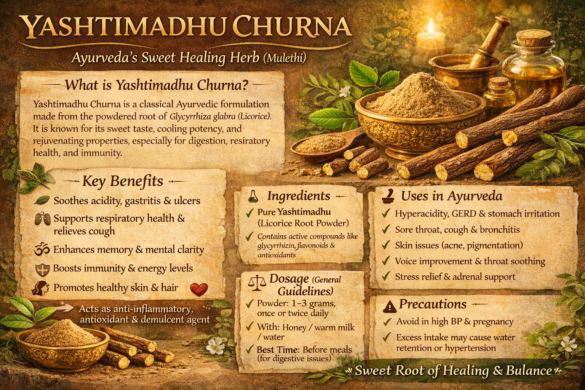
Yashtimadhu Churna is a single-herb formulation derived from the root of Glycyrrhiza glabra, commonly known as Licorice or Mulethi. Classified as a “Rasayana” (rejuvenative) and “Vayahsthapana” (age-defying) herb, it has been used for thousands of years in Ayurveda for its soothing, anti-inflammatory, and rejuvenating properties. The name “Yashtimadhu” means “sweet stick,” referring to its sweet taste and stick-like root form.
Rooted in classical texts like the Charaka Samhita and Sushruta Samhita, Yashtimadhu is considered one of the most important herbs in the Ayurvedic pharmacopoeia. It is revered for its ability to balance all three doshas when used appropriately, though it is particularly beneficial for Pitta and Vata. Today, Yashtimadhu Churna has gained global recognition as a natural remedy for digestive issues, respiratory disorders, and skin conditions.
Composition and Ingredients
Yashtimadhu Churna is a single-ingredient formulation consisting of:
| Ingredient | Sanskrit Name | Botanical Name | Part Used | Primary Function |
| Yashtimadhu | Mulethi | Glycyrrhiza glabra | Root/Stolon | Anti-inflammatory, demulcent, rejuvenative |
The preparation involves careful collection of mature roots, thorough cleaning, drying, and fine powdering. The quality depends significantly on the source, age of the root, and processing methods. The characteristic sweet taste comes from glycyrrhizin, the active compound.
Ayurvedic Properties
Yashtimadhu is primarily Pitta-Vata pacifying with a balancing effect on Kapha when used in appropriate doses.
| Property | Description |
| Rasa (Taste) | Madhura (Sweet) |
| Guna (Qualities) | Guru (Heavy), Snigdha (Unctuous) |
| Virya (Potency) | Shita (Cooling) |
| Vipaka (Post-digestive effect) | Madhura (Sweet) |
| Dosha Effect | Vata-Pitta Shamaka (Pacifies Vata and Pitta) |
It acts as a Rasayana (rejuvenative), Kanthya (throat benefitting), Chakshushya (eye benefitting), Shothahara (anti-inflammatory), and Vrishya (aphrodisiac). It supports multiple body systems through its cooling, soothing, and nourishing properties.
Health Benefits
1. Respiratory Health
Yashtimadhu is renowned for respiratory support:
- Soothes sore throat and hoarseness
- Relieves dry, irritating cough
- Acts as a natural expectorant
- Supports bronchial health
- Reduces inflammation in respiratory passages
2. Digestive Health
The herb provides multiple digestive benefits:
- Protects gastric mucosa
- Helps manage hyperacidity and heartburn
- Soothes gastric and peptic ulcers
- Supports healthy digestion
- Acts as a mild laxative
3. Anti-inflammatory Action
Yashtimadhu’s potent anti-inflammatory properties help:
- Reduce joint inflammation
- Manage inflammatory skin conditions
- Soothe mucous membrane inflammation
- Support recovery from injuries
4. Oral Health
Traditionally used for dental care:
- Strengthens teeth and gums
- Reduces plaque formation
- Prevents cavities
- Soothes mouth ulcers
- Freshens breath
5. Skin Health
Topical and internal use benefits skin:
- Reduces inflammation in acne and eczema
- Soothes sunburn and rashes
- Promotes wound healing
- Provides anti-aging benefits
- Reduces hyperpigmentation
6. Adrenal Support
As an adaptogen, Yashtimadhu:
- Supports healthy cortisol levels
- Helps manage stress
- Reduces fatigue
- Supports adrenal function
7. Liver Protection
Research suggests hepatoprotective effects:
- Supports liver detoxification
- Protects against toxin-induced damage
- Promotes healthy liver enzyme levels
8. Women’s Health
Beneficial for various gynecological concerns:
- Supports hormonal balance
- Soothes menstrual discomfort
- Useful in managing menopausal symptoms
9. Voice Health
Invaluable for professional voice users:
- Soothes vocal cords
- Reduces hoarseness
- Improves voice clarity
- Prevents voice strain
10. Eye Health
Classical texts mention benefits for eyes:
- Reduces eye inflammation
- Soothes tired eyes
- Supports overall eye health
11. Hair Health
Used in hair care for:
- Reducing dandruff
- Promoting hair growth
- Conditioning hair
- Soothing scalp inflammation
12. Anti-viral Properties
Research indicates activity against certain viruses:
- Supports immune response
- May help manage viral infections
Usage and Dosage
Internal Dosage
- Adults (Powder): 1/4 to 1/2 teaspoon (1–3 grams) once or twice daily
- Adults (Decoction): 10–20 ml twice daily
- Children: 1/8 to 1/4 teaspoon once daily (under supervision)
- Duration: Short to medium-term use recommended; long-term use requires professional supervision
External Use
- As Paste: Mix with water, rose water, or honey for skin application
- As Mouth Rinse: Boil in water, cool, and use as gargle
- As Hair Mask: Mix with other herbs and apply to scalp
Best Time for Consumption
- With Milk at Bedtime: For rejuvenation and sound sleep
- After Meals: For digestive support
- During Respiratory Symptoms: 2–3 times daily with honey
- Empty Stomach: For maximum absorption (short-term only)
Anupama (Adjuvants)
- Honey: For respiratory conditions
- Milk: Classic adjuvant for rejuvenation
- Warm Water: For general use
- Ghee: For Pitta disorders
- Rose Water: For external application
Administration Method
Mix powder with chosen adjuvant, consume, and follow with warm water if needed.
Market and Industry Importance
Yashtimadhu Churna holds a significant position in both domestic and international herbal markets. Its versatility and well-researched benefits make it a high-demand product.
Market Drivers
- Scientific Validation: Extensive research supports traditional uses
- Versatility: Applicable across multiple health categories
- Global Recognition: Well-known in Western herbalism and Traditional Chinese Medicine
- Natural Sweetener Trend: Consumer interest in natural alternatives to sugar
- Respiratory Health Focus: Increased awareness post-pandemic
- Skin Care Boom: Rising demand for natural ingredients in cosmetics
Commercial Variants
- Yashtimadhu Churna: Traditional powder form
- Yashtimadhu Capsules/Tablets: Convenience format
- Yashtimadhu Liquid Extract/Tincture: Concentrated form
- Yashtimadhu Tea: Convenient tea bags
- Deglycyrrhizinated Licorice (DGL): For long-term digestive use without glycyrrhizin side effects
- Yashtimadhu in Cosmetics: Used in skin and hair care products
Industry Applications
Yashtimadhu is used in:
- Pharmaceutical preparations
- Nutraceutical supplements
- Herbal teas and beverages
- Oral care products
- Skin care cosmetics
- Hair care formulations
- Confectionery (as natural sweetener)
Market Segmentation
- Domestic Market (India): Traditional medicine and household remedy
- Export Market (USA, Europe, Japan): Dietary supplements and natural medicine
- Cosmetic Industry: Natural ingredient for skin and hair products
- Food Industry: Natural sweetener and flavoring agent
Quality Considerations
Quality varies significantly based on:
- Source and authenticity of Glycyrrhiza glabra
- Glycyrrhizin content (typically 4-8%)
- Presence of adulterants (other Glycyrrhiza species)
- Processing methods
- Microbial purity
Precautions and Contraindications
Contraindications
- Pregnancy: Avoid in therapeutic doses during pregnancy
- Hypertension: May increase blood pressure with prolonged use
- Hypokalemia: Can lower potassium levels with extended use
- Kidney Disease: Avoid in renal impairment
- Liver Disease: Use under supervision
- Diabetes: May affect blood sugar levels
- Edema: Avoid in fluid retention conditions
Possible Side Effects (with prolonged use or high doses)
- Hypertension (high blood pressure)
- Hypokalemia (low potassium)
- Edema (fluid retention)
- Lethargy and headache
- Cardiac issues in susceptible individuals
Drug Interactions
May interact with:
- Diuretics (increases potassium loss)
- Antihypertensive medications
- Corticosteroids
- Blood thinners
- Hormonal medications
Duration of Use
Generally recommended for short-term use (2-4 weeks). Long-term use requires:
- Professional supervision
- Potassium monitoring
- Blood pressure monitoring
- Use of DGL form for digestive applications
Quality and Safety
- Choose reputable sources with quality testing
- Look for products tested for glycyrrhizin content
- Ensure absence of heavy metals and contaminants
- Consider DGL form for long-term digestive use
Storage
Keep in airtight container away from moisture and direct sunlight.
Conclusion
Yashtimadhu Churna embodies the essence of Ayurvedic Rasayana therapy—nourishing, soothing, and rejuvenating. Its remarkable range of applications, from respiratory health to skin care, from digestive support to adrenal function, makes it one of the most versatile herbs in the Ayurvedic materia medica. The sweet taste that gives it its name is not merely sensory pleasure but an indication of its profound nourishing properties.
As scientific research continues to validate traditional wisdom, Yashtimadhu’s global significance only grows. For consumers, it offers a natural solution to common health concerns. For the Ayurvedic industry, it represents both a staple product and a valuable ingredient for value-added formulations. Used wisely and respectfully, Yashtimadhu Churna remains what it has been for millennia—a sweet gift of nature for human health and well-being.
