

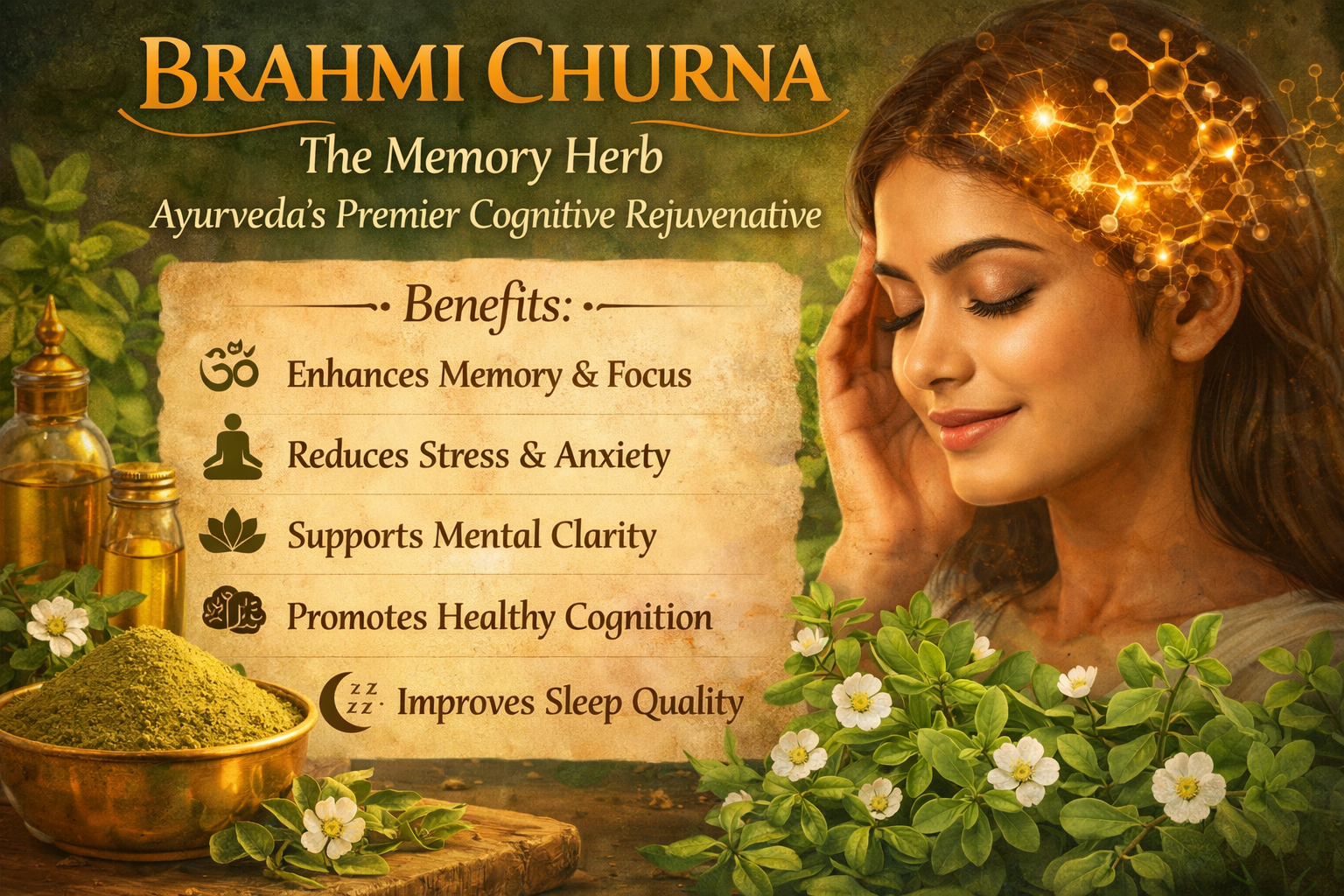
The Memory Herb: Ayurveda’s Premier Cognitive Rejuvenative
In the sacred texts of Ayurveda, few herbs are as intimately associated with the mind as Brahmi (Bacopa monnieri). Revered for over three millennia as a “Medhya Rasayana”—a cognitive rejuvenative that enhances intellect, memory, and mental clarity—Brahmi occupies a unique position in the Ayurvedic pharmacopoeia. Its very name evokes the divine essence of Brahma, the creator, suggesting its profound ability to expand consciousness and sharpen the mind.
As the global burden of cognitive decline, stress, and mental fatigue continues to rise, Brahmi has emerged from the realm of traditional wisdom into the spotlight of modern neuroscience. Today, it stands as one of the most researched and commercially significant botanicals in the world, with applications spanning from pediatric cognitive support to geriatric memory preservation.
This comprehensive monograph explores the botanical, clinical, and commercial dimensions of this extraordinary herb, providing healthcare professionals and industry stakeholders with a complete understanding of its therapeutic potential and market significance.
BOTANICAL IDENTITY AND CLASSIFICATION
| Scientific Name | Bacopa monnieri (L.) Wettst. |
| Family | Plantaginaceae (formerly Scrophulariaceae) |
| Synonyms | Herpestis monniera, Gratiola monniera |
| Common Names | Brahmi, Water Hyssop, Indian Pennywort, Thyme-leafed Gratiola |
| Part Used | Entire plant (aerial parts) |
| Energetics | Cooling (Shita Virya) |
| Taste | Tikta (Bitter), Kashaya (Astringent) |
| Doshic Action | Balances Vata and Pitta; mildly increases Kapha |
THE CLASSICAL LEGACY
Brahmi’s prominence in Ayurvedic literature is unparalleled among cognitive herbs. It is the foremost “Medhya Rasayana”—a classification reserved for herbs that specifically enhance intellect, memory, and mental function.
TEXTUAL REFERENCES
| Classical Text | Sanskrit Name | Classification | Key Indications |
| Charaka Samhita | Brahmi | Medhya Rasayana | Smriti (memory), Medha (intellect), Ayu (longevity) |
| Sushruta Samhita | Brahmi | Vishaghna (detoxifier) | Unmada (psychosis), Apasmara (epilepsy) |
| Ashtanga Hridaya | Brahmi | Rasayana | Manasa Vikara (mental disorders) |
| Bhavaprakasha Nighantu | Brahmi | Medhya | Kushta (skin disorders), Krimi (parasites) |
TRADITIONAL CLASSIFICATIONS
In classical Ayurvedic texts, Brahmi is ascribed multiple therapeutic actions:
- Medhya – Cognitive enhancer, improves intelligence and memory
- Rasayana – Rejuvenative, promotes longevity and tissue regeneration
- Ayushya – Promotes longevity
- Swaraya – Improves voice and complexion
- Pramehaghna – Anti-diabetic
- Vishaghna – Detoxifier, anti-toxic
- Kushtaghna – Anti-skin disorder
- Krimighna – Anti-parasitic
- Unmadahara – Anti-psychotic
- Apasmara hara – Anti-epileptic
PHYTOCHEMISTRY: THE NEUROACTIVE CONSTITUENTS
Modern phytochemical analysis has revealed over 200 compounds in Bacopa monnieri, with the primary bioactive constituents being dammarane-type triterpenoid saponins known as bacosides.
MAJOR CONSTITUENTS
| Compound Class | Key Constituents | Concentration | Primary Activity |
| Bacosides | Bacoside A3, Bacopaside II, Bacopasaponin C | 2-5% | Cognitive enhancement, neuroprotection |
| Bacopasaponins | Bacopasaponins A-G | 1-3% | Memory enhancement, antioxidant |
| Alkaloids | Brahmine, Herpestine, Nicotinine | Trace | CNS modulation |
| Flavonoids | Apigenin, Luteolin, Quercetin | Variable | Antioxidant, anti-inflammatory |
| Phenylethanoids | Monnieraside, Plantainoside B | Variable | Neuroprotective |
| Sterols | β-sitosterol, Stigmasterol | Trace | Membrane stabilization |
BACOSIDES: THE ACTIVE PRINCIPLE
Bacosides, particularly Bacoside A (a mixture of bacoside A3, bacopaside II, and bacopasaponin C), are considered the primary active constituents responsible for Brahmi’s cognitive effects.
Mechanisms of Action:
- Enhancement of cerebral blood flow
- Modulation of acetylcholinesterase activity
- Regulation of serotonin, dopamine, and GABA
- Antioxidant protection of neural tissue
- Promotion of neuronal dendrite branching
- Enhancement of protein kinase activity in hippocampus
THERAPEUTIC APPLICATIONS
COGNITIVE ENHANCEMENT
Brahmi’s primary and most well-researched application is cognitive enhancement across all age groups.
Memory and Learning:
- Improves immediate and delayed memory recall
- Enhances learning acquisition and retention
- Increases spatial learning ability
- Improves working memory capacity
- Facilitates information processing speed
Attention and Focus:
- Enhances sustained attention
- Reduces distractibility
- Improves task completion
- Supports executive function
- Beneficial in attention deficit disorders
Clinical Evidence:
A meta-analysis of randomized controlled trials published in the Journal of Alternative and Complementary Medicine demonstrated significant improvements in:
- Free recall memory (p < 0.001)
- Verbal learning (p < 0.01)
- Information processing speed (p < 0.05)
- Sustained attention (p < 0.05)
AGE-RELATED COGNITIVE DECLINE
As a Rasayana, Brahmi shows particular promise in supporting cognitive health in aging populations.
Mechanisms in Aging:
- Reduces beta-amyloid accumulation
- Protects against oxidative stress
- Enhances cerebral circulation
- Supports synaptic plasticity
- Modulates neuroinflammation
Clinical Applications:
- Age-associated memory impairment
- Mild cognitive impairment
- Supportive therapy in dementia
- Vascular cognitive impairment
- Cognitive vitality in healthy aging
STRESS AND ANXIETY MANAGEMENT
Brahmi’s adaptogenic properties make it valuable in stress-related conditions.
Anti-Stress Effects:
- Reduces cortisol levels
- Modulates HPA axis function
- Enhances stress resilience
- Reduces anxiety symptoms
- Improves mood stability
Clinical Evidence:
A randomized, double-blind, placebo-controlled study published in Neuropsychopharmacology showed significant reduction in anxiety scores (Hamilton Anxiety Rating Scale) after 4 weeks of Brahmi administration.
ATTENTION DEFICIT HYPERACTIVITY DISORDER (ADHD)
Emerging research supports Brahmi’s role in managing ADHD symptoms, particularly in children.
Pediatric Applications:
- Reduces restlessness and hyperactivity
- Improves attention span
- Enhances learning capacity
- Reduces impulsivity
- Supports emotional regulation
Clinical Study:
A 12-week randomized, double-blind trial in children aged 6-12 with ADHD demonstrated significant improvement in:
- Restlessness scores (p < 0.01)
- Self-control (p < 0.05)
- Learning problems (p < 0.05)
- Impulsivity (p < 0.05)
EPILEPSY AND SEIZURE DISORDERS
Classical texts mention Brahmi in Apasmara (epilepsy). Modern research provides mechanistic support.
Anticonvulsant Mechanisms:
- GABAergic modulation
- Calcium channel regulation
- Antioxidant protection
- Neuronal membrane stabilization
Clinical Note: Should only be used as adjunctive therapy under professional supervision in epilepsy.
NEUROPROTECTION
Brahmi’s antioxidant and anti-inflammatory properties provide broad neuroprotective effects.
Protective Mechanisms:
- Scavenges free radicals
- Reduces lipid peroxidation
- Chelates metal ions
- Modulates inflammatory cytokines
- Supports mitochondrial function
Applications:
- Stroke recovery
- Traumatic brain injury
- Neurotoxin exposure
- Chemotherapy-related cognitive impairment
- Post-viral cognitive dysfunction
MENTAL FATIGUE AND BURNOUT
In today’s high-stress environment, Brahmi offers support for mental exhaustion.
Benefits:
- Reduces mental fatigue
- Improves work performance
- Enhances mental stamina
- Supports recovery from burnout
- Improves sleep quality
EPILEPSY AND SEIZURE DISORDERS
Classical texts mention Brahmi in Apasmara (epilepsy). Modern research provides mechanistic support.
Anticonvulsant Mechanisms:
- GABAergic modulation
- Calcium channel regulation
- Antioxidant protection
- Neuronal membrane stabilization
Clinical Note: Should only be used as adjunctive therapy under professional supervision in epilepsy.
SKIN HEALTH (KUSHTAGHNA)
Classical texts also indicate Brahmi for skin disorders, particularly those involving inflammation.
Dermatological Applications:
- Psoriasis (supportive)
- Eczema
- Inflammatory skin conditions
- Wound healing
- Skin rejuvenation
RESPIRATORY HEALTH
Traditional texts mention Brahmi in respiratory conditions, particularly those involving Kapha.
Respiratory Applications:
- Bronchial congestion
- Asthma (supportive)
- Upper respiratory infections
- Allergic rhinitis
CLINICAL APPLICATIONS BY AGE GROUP
| Age Group | Primary Applications | Supporting Benefits |
| Children (5-12) | ADHD, learning difficulties, memory enhancement | Concentration, academic performance |
| Adolescents (13-19) | Exam stress, focus, memory | Anxiety reduction, mental clarity |
| Adults (20-50) | Work performance, stress management, mental fatigue | Cognitive enhancement, mood stability |
| Seniors (50+) | Age-related memory decline, cognitive vitality | Neuroprotection, mental sharpness |
| All Ages | General cognitive support, stress resilience | Overall brain health |
FORMULATIONS AND DOSAGE GUIDELINES
TRADITIONAL PREPARATIONS
| Formulation | Description | Typical Dosage |
| Brahmi Churna | Fine powder of dried whole plant | 3-6 grams twice daily |
| Brahmi Capsules/Tablets | Standardized extract or powder | 500-1000 mg twice daily |
| Brahmi Ghrita | Medicated ghee preparation | 1-2 teaspoons with warm milk |
| Brahmi Swarasa | Fresh plant juice | 10-20 ml twice daily |
| Brahmi Kvatha | Decoction | 20-30 ml twice daily |
| Brahmi Taila | Medicated oil | For external application (scalp) |
| Brahmi Syrup | Liquid formulation | 10-20 ml twice daily |
STANDARDIZATION PARAMETERS
For consistent therapeutic effect, standardized extracts should contain:
| Marker Compound | Recommended Level | Test Method |
| Bacoside A (total) | Minimum 20% | HPLC |
| Bacoside A3 | 5-10% | HPLC |
| Bacopaside II | 5-10% | HPLC |
| Total saponins | Minimum 50% | UV-VIS |
OPTIMAL ADMINISTRATION
Anupama (Adjuvants):
- Warm Milk: The classic adjuvant; enhances nourishing and rejuvenating properties
- Ghee: Enhances absorption and brain uptake
- Honey: For enhanced absorption and Kapha conditions
- Warm Water: For general use
- Almond Milk: Synergistic cognitive support
Best Time for Consumption:
- Morning: For cognitive enhancement throughout the day
- Evening: For memory consolidation (with milk)
- Before Study Sessions: For learning and retention
- With Meals: For general cognitive support
Duration of Use:
Brahmi requires consistent use for optimal effects:
- Initial effects: 2-4 weeks
- Optimal effects: 8-12 weeks
- Long-term use: Safe under professional guidance
- Cyclical use: 3 months on, 2 weeks off recommended
SAFETY PROFILE AND CONTRAINDICATIONS
PRECAUTIONS
| Condition | Recommendation |
| Pregnancy | Avoid; emmenagogue effects possible |
| Lactation | Safety not established; avoid |
| Bradycardia | May slow heart rate; monitor |
| Thyroid disorders | May increase T4; monitor |
| Urinary obstruction | Caution due to diuretic effect |
| Gastrointestinal hypermotility | May increase motility |
| Surgery | Discontinue 2 weeks prior (CNS effects) |
DRUG INTERACTIONS
Brahmi may interact with:
| Drug Class | Potential Interaction | Clinical Recommendation |
| Anticholinergics | Additive effects | Monitor, adjust dosage |
| Cholinergic drugs | Synergistic effects | Monitor, reduce dosage |
| Thyroid medications | May enhance T4 | Monitor thyroid levels |
| Sedatives/Hypnotics | Additive sedation | Caution, monitor |
| Anticonvulsants | May alter seizure threshold | Professional supervision only |
| MAOIs | Theoretical interaction | Avoid combination |
ADVERSE EFFECTS
Generally well-tolerated, rare effects may include:
- Mild gastrointestinal discomfort (nausea, cramping)
- Dry mouth
- Fatigue (at high doses)
- Bradycardia (at very high doses)
- Skin rash (rare, hypersensitivity)
QUALITY CONSIDERATIONS
The therapeutic efficacy of Brahmi depends critically on quality:
| Quality Parameter | Optimal Characteristic |
| Source | Wild-crafted or organically cultivated |
| Harvest time | Peak bacoside content (flowering stage) |
| Processing | Shade-dried, properly stored |
| Bacoside content | Standardized to minimum 20% |
| Microbial purity | GMP certified, pathogen-free |
| Heavy metals | Tested and within safe limits |
| Adulterants | Test for Centella asiatica (Gotu Kola) confusion |
MARKET ANALYSIS AND COMMERCIAL SIGNIFICANCE
GLOBAL MARKET POSITION
Brahmi has emerged as a leading botanical in the global cognitive health market, with compound annual growth rate (CAGR) exceeding 10% in key markets.
| Region | Market Size (Estimated) | Growth Rate | Primary Drivers |
| North America | $XX million | 12% CAGR | Nootropic trend, aging population |
| Europe | $XX million | 9% CAGR | Cognitive health awareness |
| India | $XX million | 15% CAGR | Traditional use, pediatric segment |
| Asia-Pacific | $XX million | 11% CAGR | Student population, aging |
| Rest of World | $XX million | 8% CAGR | Emerging wellness markets |
MARKET SEGMENTATION
By Product Type:
- Traditional Churna (bulk powder)
- Standardized Capsules/Tablets
- Liquid Extracts and Tinctures
- Medicated Ghee (Brahmi Ghrita)
- Brahmi Oil (external)
- Functional Foods and Beverages
- Combination Nootropic Formulations
By Distribution Channel:
- Ayurvedic pharmacies and clinics
- Modern retail (pharmacies, health stores)
- E-commerce (Amazon, iHerb, specialty sites)
- Direct-to-consumer (brand websites)
- Practitioner channels
- Export/wholesale
By Consumer Segment:
- Students (exams, academic performance)
- Working professionals (mental performance)
- Seniors (age-related memory support)
- Children (ADHD, learning difficulties)
- General wellness consumers
- Ayurvedic practitioners’ patients
MARKET TRENDS AND DRIVERS
- Nootropic Boom
Explosive growth in cognitive enhancement supplements - Aging Population
Global demographic shift driving memory support demand - Academic Pressure
Increasing student population seeking cognitive edge - Workplace Performance
Corporate wellness programs including cognitive support - Scientific Validation
Growing body of clinical research supporting efficacy - Natural Alternatives
Shift away from prescription cognitive enhancers - Pediatric ADHD
Demand for natural alternatives to stimulant medications - Post-COVID Cognitive Support
“Brain fog” recovery driving demand
COMPETITIVE LANDSCAPE
Traditional Ayurvedic Manufacturers:
- Dabur (Brahami Vati)
- Baidyanath (Brahmi Ghrita)
- Himalaya (Brahmi Capsules)
- Patanjali (Brahmi Churna)
- Zandu (Brahmi Taila)
Global Nutraceutical Companies:
- Himalaya (global range)
- Organic India (Brahmi capsules)
- Banyan Botanicals
- Gaia Herbs
- Nature’s Way
- NOW Foods
- Swanson Health Products
Specialized Nootropic Brands:
- Qualia (Neurohacker Collective)
- Mind Lab Pro
- Performance Lab
- Onnit
- Pure Nootropics
DIFFERENTIATION STRATEGIES
| Strategy | Examples | Market Position |
| Standardized to Bacosides | Minimum 20% bacosides | Premium efficacy positioning |
| Organic Certification | USDA Organic, India Organic | Clean, sustainable image |
| Synergistic Combinations | Brahmi + Ashwagandha + Ginkgo | Comprehensive cognitive formulas |
| Novel Delivery Systems | Liposomal, nano-emulsions | Enhanced bioavailability claims |
| Clinical Research Support | Published human trials | Evidence-based positioning |
| Traditional Authenticity | Classical formulation, GMP-heritage | Authenticity, practitioner trust |
MARKET CHALLENGES
- Quality Consistency
Variation in bacoside content between batches - Adulteration Risk
Confusion with Centella asiatica (Gotu Kola) - Regulatory Complexity
Varying status across markets (dietary supplement vs. traditional medicine) - Consumer Education
Need for awareness about proper use and duration - Supply Chain Issues
Sustainable cultivation vs. wild collection - Competition
Increasing number of market entrants
SUSTAINABILITY AND ETHICAL SOURCING
CONSERVATION STATUS
Bacopa monnieri is currently classified as:
- IUCN Status: Least Concern (globally)
- Regional Status: Vulnerable in certain habitats due to wetland destruction
THREATS TO WILD POPULATIONS
- Wetland drainage and habitat loss
- Over-harvesting for commercial trade
- Pollution of freshwater habitats
- Climate change impacts
- Collection before seed set
SUSTAINABLE SOLUTIONS
Cultivation Initiatives:
- Commercial farming in India (Gujarat, Uttar Pradesh)
- Controlled environment cultivation
- Hydroponic systems
- Farmer cooperatives
Harvesting Guidelines:
- Collection only from mature stands
- Rotational harvesting
- Leaving 30% for regeneration
- Post-harvest seed dispersal
Certification Programs:
- Organic certification
- FairWild certification (under development)
- Fair Trade certification
- Company-specific sustainability programs
FUTURE DIRECTIONS
RESEARCH PRIORITIES
- Mechanistic Studies
Detailed understanding of bacoside-neuron interactions - Long-term Clinical Trials
Extended duration studies (12+ months) - Pediatric Research
Rigorous trials in ADHD and learning disorders - Neurodegenerative Disease
Alzheimer’s, Parkinson’s, Huntington’s applications - Pharmacokinetics
Bioavailability enhancement strategies - Synergy Studies
Optimal combinations with other cognitive herbs
PRODUCT INNOVATION
- Enhanced Bioavailability
Liposomal formulations, phytosome technology, nano-emulsions - Novel Delivery Systems
Sublingual strips, transdermal patches, nasal sprays - Functional Foods
Brahmi-enriched beverages, snack bars, chocolates - Personalized Cognitive Formulas
Tailored to cognitive profile, age, and constitution - Combination Products
Evidence-based nootropic stacks - Pediatric Formulations
Gummies, flavored powders, fun delivery formats
MARKET EXPANSION
- Geographic Growth
Latin America, Africa, Southeast Asia - New Consumer Segments
Corporate wellness, sports cognition, creative professionals - Healthcare Integration
Hospital protocols, insurance coverage, clinical guidelines - Professional Education
Training healthcare providers in evidence-based use - Regulatory Advancement
Traditional use registration in new markets
CLINICAL SUMMARY FOR PRACTITIONERS
INDICATIONS
| Category | Specific Indications | Evidence Level |
| Cognitive | Memory impairment, learning difficulties, poor concentration | Strong (RCTs) |
| Psychiatric | Anxiety, stress, mild depression | Moderate |
| Neurological | ADHD, age-related cognitive decline, post-stroke recovery | Moderate |
| Pediatric | Learning disorders, attention deficit, academic stress | Moderate |
| Geriatric | Memory loss, cognitive vitality, neuroprotection | Strong |
| General | Mental fatigue, brain fog, work performance | Moderate |
DOSAGE GUIDELINES
| Form | Daily Dosage | Duration |
| Powder (Churna) | 3-6 grams | 8-12 weeks minimum |
| Standardized Extract (20% bacosides) | 300-450 mg | 8-12 weeks minimum |
| Fresh Juice | 10-20 ml | 8-12 weeks minimum |
| Medicated Ghee | 5-10 grams | Long-term |
KEY CONTRAINDICATIONS
- Pregnancy and lactation
- Bradycardia
- Thyroid disorders (monitor)
- MAOI use
CLINICAL PEARLS
- Brahmi requires consistent use for 4-8 weeks before optimal effects manifest
- Combining with milk and ghee enhances brain uptake (traditional wisdom)
- Morning dosing supports daytime cognition; evening dosing with milk supports memory consolidation
- Cyclical use (3 months on, 2 weeks off) prevents tolerance
- Quality standardization to bacosides is critical for consistent results
CONCLUSION
Brahmi Churna represents the pinnacle of Ayurvedic cognitive medicine—an herb whose traditional wisdom is increasingly validated by modern neuroscience. From ancient rishis seeking expanded consciousness to modern students seeking academic excellence, from elders preserving precious memories to professionals maintaining mental edge, Brahmi serves humanity across all ages and aspirations.
As the global burden of cognitive disorders rises and the demand for natural cognitive enhancement grows, Brahmi stands poised to become one of the most significant botanicals of the 21st century. For the Ayurvedic industry, it represents both a responsibility—to ensure sustainable, ethical sourcing and quality manufacturing—and an unprecedented opportunity to share this gift of nature with a world hungry for mental clarity, memory, and peace of mind.
In an age of information overload, digital distraction, and cognitive fatigue, Brahmi offers something precious: the quieting of mental noise, the sharpening of perception, and the expansion of consciousness that has been its gift to humanity for over three thousand years. The Memory Herb remembers what we have forgotten—that true intelligence is not just processing power, but clarity, calm, and connection to something deeper.
